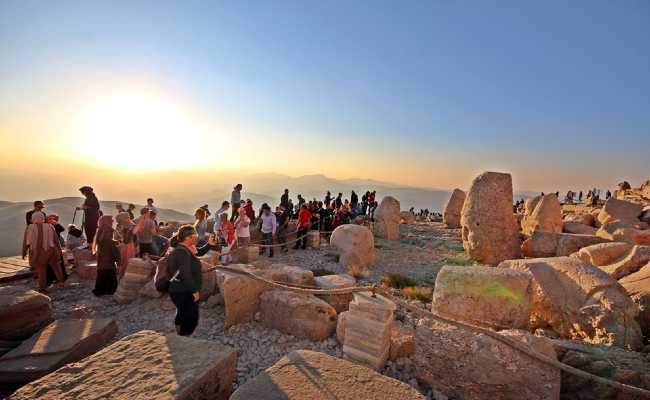
Located in the southeastern Anatolia Region, ADIYMAN is bordered by Malatya, Gaziantep, Kahramanmaraş, Şanlıurfa and Diyarbakır. Like its neighbors who have taken successful steps in the field of tourism, ADIYAMAN naturally wants to take a larger slice from the tourism pie.
Efforts are being made by officialsto increase the competitiveness of the town in the tourism sector. The project, which is carried out by the Governorship of ADIYAMAN, aims to contribute to the socio-economic development of the region. For this purpose, it is aimed to promote the historical and cultural areas of the city, local cuisine, hiking trails, camping areas, gift products, eco and alternative tourism opportunities in the national and international markets. In the project, joint work is carried out with people and organizations specializing in their subjects, and effective and effective use of social media is also practiced.


BRIEF HISTORY OF ADIYAMAN
The city, whose region and neighbors were mentioned above, is one of the oldest settlements in Anatolia. It has been understood through archaeological excavations that it has been used as a living settlement since the Old Stone age. The area between the Euphrates Region and the Taurus Mountains, on which it is located, was home to a large number of tribes and civilizations. After the Hittites, the Kingdom of Kumruh (considered the ancestors of the Kingdom of Commagene), Assyria, Med and Persia, it came under Macedonian rule with Alexander the Great in 163 (BC) while under the administration of the Seleucid dynasty, the provincial administrator Ptolemy declared his independence and laid the foundation of the Kingdom of Commagene. Commagene was annexed to the Roman Empire in 72 (A.C.). It passed into the hands of Muslim Arabs. The Umayyad commander Mansur Ibn-i Cavene built a fortress in the center of Adiyaman in order to protect against Byzantine attacks. From this date, it began to be called with the name of Hisn-ı Mansur in the sense of “Mansur’s Castle”. After 1071, the city changed hands between Turks and Arabs for four hundred years, and was annexed to the Ottoman lands by Yavuz Sultan Selim in Dec. 1516. It was renamed ADIYAMAN in 1926.