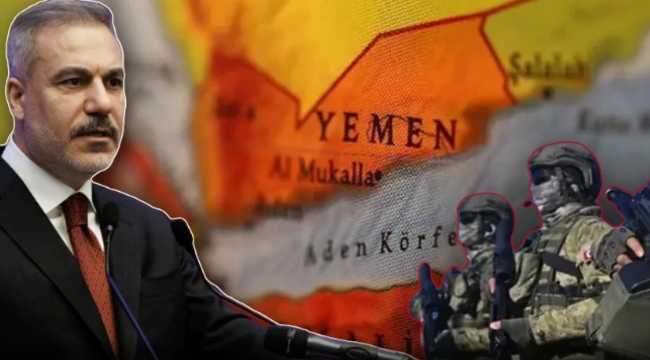
The trilateral defence agreement between Turkey, Saudi Arabia and Pakistan raises an important question: could Turkey eventually find itself involved in the war in Yemen?
The short answer is yes, Turkey could become involved to some extent in the conflict, particularly through defence cooperation and military support. However, this does not mean that Turkey has agreed to enter the war in Yemen.


1. What Is the Turkey–Saudi Arabia–Pakistan Agreement About?
The trilateral defence agreement is based on three main principles:
- Collective defence: An armed attack against one of the participating countries may be treated as an attack against all three.
- Military cooperation: Joint exercises, air defence, unmanned systems, electronic warfare and cooperation in the defence industry.
- Regional deterrence: Enabling the three countries to act together in response to threats to their security.
In this respect, the agreement resembles Article 5 of NATO’s founding treaty. However, an important distinction remains: the full text of the agreement has not been made public. It is therefore too early to conclude precisely what military action each country would be obliged to take in the event of an attack.
The agreement was not designed exclusively for Yemen. More broadly, it aims to strengthen cooperation and mutual support among the three countries in regional security and defence.
2. Could Turkey Be Drawn into the War in Yemen?
The key issue is the Houthi attacks against Saudi Arabia and Riyadh’s need for additional defensive support.
As of 15 October 2026, several possibilities deserve attention.
Turkey’s potential contribution: Air defence systems, electronic warfare capabilities, technical assistance and military coordination are among the possible forms of support. On 8 October, Foreign Minister Hakan Fidan stated that Turkey would not participate in offensive operations or send troops to Yemen to launch attacks.
Implementation of the agreement: On 5 October, the three countries agreed to implement their mutual defence commitments and rapidly deploy the necessary military capabilities to Saudi Arabia.
The risk of a wider conflict: If Houthi attacks continue and Saudi Arabia requests further military assistance, Turkey’s role could expand. However, providing defensive support does not automatically mean becoming a direct participant in combat operations inside Yemen.
3. Would Turkey Be Obliged to Join the War?
Three different scenarios need to be distinguished.
| Scenario | What it could mean for Turkey |
| Defensive support for Saudi Arabia | Possible within the framework of defence cooperation. |
| Direct attacks against the Houthis | Contrary to the Turkish government’s publicly stated position at present. |
| Escalation of attacks against Saudi Arabia and activation of collective defence commitments | Increased military and political pressure on Turkey, although the form of its response would remain crucial. |
There is also an important legal consideration. As of 8 October, the process of parliamentary approval by Turkey’s Grand National Assembly had not yet been completed. The agreement’s status under Turkish domestic law is therefore another factor to consider.
4. What Is the Likely Implication for Turkey?
Turkey’s provision of defensive support to Saudi Arabia has become a concrete possibility. However, direct Turkish participation in combat against the Houthis on Yemeni territory remains outside the policy publicly announced so far.
Such a development would depend on a further escalation of the conflict and possible changes in political decisions.
The main danger is that cooperation initially intended for defensive purposes could expand into a wider regional war as attacks and counterattacks intensify.
For Turkey, the difficult question would be how to balance two competing considerations: protecting a partner under a defence agreement while avoiding direct involvement in a much wider conflict.