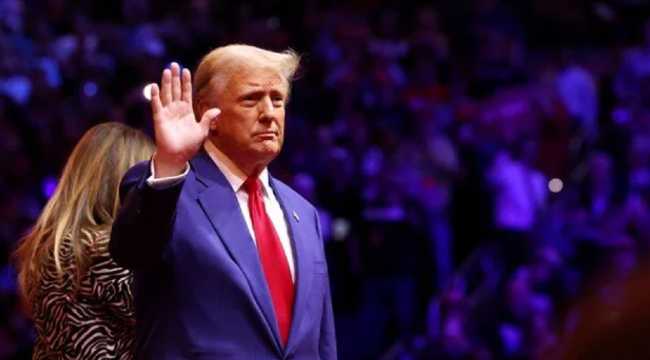
Donald Trump’s declaration of victory in the U.S. presidential elections has raised discussions about its potential impact on Turkey’s economy. Following this development, the Turkish lira (TL) appreciated against the dollar, distinguishing itself positively among emerging market currencies.
On the other hand, Turkey’s BIST100 index rose by approximately 3%. In the U.S., the S&P 500 index and Treasury bond yields hit record levels, with the 10-year Treasury yield reaching 4.47%, reflecting market reactions to Trump’s expected influence on the economy.
ERDOGAN CONGRATULATES TRUMP
President Recep Tayyip Erdoğan congratulated Trump and expressed hopes for strengthened Turkey-U.S. relations. However, experts note that, given Erdoğan and Trump’s strong personalities and differing priorities, achieving a stable relationship between the two nations could be challenging.
TRUMP’S VICTORY HAS CREATED POSITIVE EFFECT ON TURKISH LIRA


A currency desk representative at a major bank commented that Trump’s victory, by reducing uncertainty, has created a positive effect on the TL, though the sustainability of this effect in the medium term remains uncertain. Among the U.S.’s foreign policy priorities, the handling of issues such as the Russia-Ukraine and Israel-Palestine conflicts will play a significant role in influencing Turkey’s economy. Experts believe that decisions on these matters could have a direct impact on Turkey’s economic stability.
STRONGER DOLLAR COULD LEAD TO FURTHER DEPRECIATION OF TL
Trump’s high tariffs on imports could strengthen the dollar globally, putting pressure on the TL. Notably, Trump’s plan to impose a 10% tariff on all imports and a 60% tariff on Chinese goods, intended to reduce the U.S. trade deficit, could add pressure on the currencies of emerging markets like Turkey. Combined with Turkey’s recent interest rate cuts and challenges in currency management, a stronger dollar could lead to further depreciation of the TL.
Trump’s previous administration imposed trade sanctions on Turkey, which remain a concern for Turkish markets. During the Pastor Brunson crisis, Trump doubled tariffs on Turkish steel and aluminum imports, causing a significant spike in exchange rates. A similar tariff increase would make Turkey’s $10 billion trade target with the U.S. even harder to achieve.
Given that Turkey’s foreign exchange earnings are largely in euros while debt payments are mostly in dollars, the euro-dollar exchange rate fluctuations significantly impact Turkey’s debt burden. Rising U.S. Treasury yields are also likely to increase Turkey’s borrowing costs, adding further economic pressure.