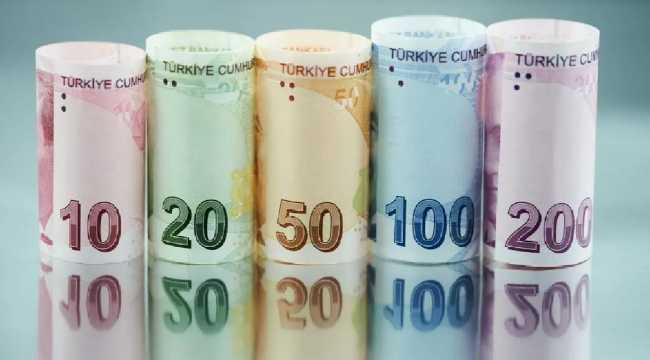
The economic outlook in Turkey is anything but boring lately. From changes in SME classifications to the trajectory of interest rates and precious metals, this week’s market chatter has been full of critical developments. Anyone with even a passing interest in the economy would’ve found plenty to chew on.
Let’s break down some of the most talked-about points—especially around interest rates, inflation, and why, despite everything, the Turkish Lira (TL) might still be holding its ground.


Deposit Rates Are High—But So Are the Taxes
Deposit interest rates are hovering around 43%, which might sound like a dream in today’s economic climate. But there’s a catch: the withholding tax (stopaj) stands at 17.5%. Once that’s taken out, the net return falls to about 35.5%. When inflation is sitting around 33.5%, that leaves investors with a real return of only 2 percentage points. Not exactly an irresistible incentive to save.
That’s why the argument is growing: if stopaj were reduced—or removed altogether—it could open the door for lower rates overall while encouraging more people to actually save, instead of spend. And that shift in behavior could help cool down inflation, which remains sticky partly because consumption still hasn’t slowed.
A New Definition for SMEs Could Shift the Credit Landscape
One of the more structural updates this week came in the form of a revised SME definition. The annual turnover threshold was raised from 500 million TL to 1 billion TL. That means more companies can now be classified as SMEs and potentially benefit from lower-cost credit.
But there’s a problem—credit expansion remains modest. The current credit growth ceiling is around 2.5%, which experts say needs to double if this reclassification is to have any real impact. Without that bump, access to credit stays tight, and limited supply almost always means higher costs. It’s simple economics: restrict a product (in this case, loans), and the price goes up.
What Are Investors Leaning Toward?
So what’s the move right now—stocks, gold, foreign currencies?
Despite all the volatility, TL-denominated deposits are still one of the few assets offering a real return. Equities, especially in the banking sector, are already starting to price in the possibility of interest rate cuts in the near future. There’s even chatter that the Central Bank could slash rates by 250–300 basis points in its September meeting, with a year-end policy rate of around 32.5%.
On the FX side, the lira is moving slowly and steadily—nothing dramatic. So for those hoping for quick wins through currency plays, it might not be the right moment.
Gold: Two Roads, One Destination?
Gold continues to flirt with key technical levels. After breaking through $3,400 several times, it recently saw a pullback to $3,275. All eyes are now on the $3,500–3,550 range. If gold manages to clear that hurdle, we could see a rally up to $4,000 before the year is out.
But if it doesn’t, a correction down to $3,050—or even $2,950—is on the table. Still, the broader view suggests that $4,000 is within reach, whether it happens this year or early next. Silver is expected to follow suit, potentially hitting the $42.5–43 range.
Is Crude Oil at a Turning Point?
In energy markets, the focus has shifted to a potentially game-changing meeting between the U.S. and Russia in Alaska. If a deal emerges from this, Brent crude could drop to around $55. Without a deal, it’s unlikely to hold above the $70–72 level for long.
Interestingly, pressure on Russia isn’t coming from the usual suspects. Instead, it’s filtering through India—one of Russia’s top oil buyers. The U.S. is reportedly considering tariffs on Indian refineries that continue to process Russian oil, aiming to steer demand away from Moscow. That indirect pressure could significantly reshape global oil flows.
TL Still Has a Seat at the Table
Despite the complexity of today’s investment environment, Turkish Lira deposits remain surprisingly resilient. With everything from inflation uncertainty to geopolitical risk in the mix, TL still manages to offer a modest but positive real return. That counts for a lot.
The bigger takeaway? This isn’t a time to make financial decisions in a vacuum. Every policy move, tax tweak, or global event can send ripples through the markets. Whether you’re parking your money short-term or thinking long game, it’s a moment for strategy—not guesswork. (ekonomim)
“Generated and translated from content on the web”