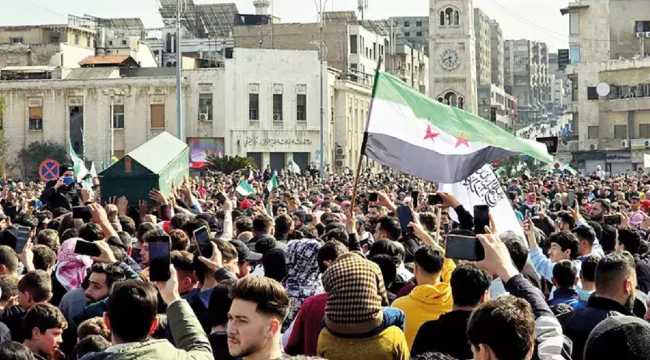
For the past four days, Syria has been witnessing escalating violence and conflicts, particularly in the coastal regions of Latakia and Tartus, which are considered strongholds of the fallen Assad regime.
These recent clashes have once again raised fears of the country returning to civil war. According to the Syrian Observatory for Human Rights (SOHR), more than 500 people have died since Thursday, including 340 Nusayri civilians. However, international news agencies have been unable to independently verify the civilian death toll.
How Did This Situation Emerge?


After the fall of the Assad regime on December 8, many officers and militia groups loyal to the regime withdrew to the rural areas of Latakia and Tartus, which are considered the stronghold of the Nusayri community, to which Assad’s family belongs. The remnants of the old regime (as expressed by the regime), primarily composed of military officers and militia groups, had always been expected to be a potential source of conflict from the early days of the Syrian revolution. The formation of the ‘Military Council for the Liberation of Syria’ under General Giyas Suleiman Dalla, one of the key figures from the old regime, did not surprise experts after the violence began.
Is There External Intervention?
Reports suggest that the pro-Assad groups, whose mission is to overthrow the new regime and “liberate” all of Syria, have received financial support from Hezbollah in Lebanon and Iraqi militias, while also receiving logistical support from the Syrian branch of the PKK, PYD/YPG. However, Hezbollah’s press office has vehemently denied these claims. The Nusayri community, which makes up about 9% of Syria’s population, was heavily represented in military and security institutions during Assad’s 50-year rule. Following the revolution, there were fears that the Nusayri community could face reprisals for the brutal Assad regime’s actions. In addition, a day before the violence escalated, Ali Akbar Velayati, a senior Iranian official, warned that Syria could be on the brink of civil war, further intensifying the situation.
How Did the Recent Events Begin?
The violence, which has been ongoing for four days, began when the ‘Military Council,’ led by former high-ranking officers of the old regime and allegedly coordinated with Bashar al-Assad, ambushed security forces in the Jableh district of Latakia on Thursday. The attack led to the deaths of at least 15 soldiers loyal to the new Syrian government. Following this, the pro-Assad ‘Military Council’ demanded the withdrawal of forces loyal to the Damascus government from Tartus and Latakia, threatening to kill the security personnel they had taken hostage if their demands were not met. The group, led by Dalla, who is closely linked to Iran, later expressed a willingness to negotiate. Social media accounts close to the Nusayri community reported that the group had asked the government for a prisoner swap. After the attack, the government in Damascus responded harshly.
Allegations of Executions
In retaliation, drones and helicopters targeted armed groups in the region, and additional troops were deployed to participate in operations centered around Latakia. While pro-Damascus sources claimed that only armed insurgents were targeted, there have been reports of Nusayri civilians being executed. SOHR claims that hundreds of unarmed Nusayri civilians were killed, although independent verification of these reports by international agencies and media outlets has not been possible.
How is Damascus Responding to the Crisis?
In response to the escalating violence, Syria’s interim President Ahmed Shara issued a video message calling for national unity and solidarity. In his message, Shara highlighted that some remnants of the old regime were attempting to test the new Syria and called on them to cease their violent actions. He appealed to the forces of the former Baath regime, stating, “We are a people who want to rebuild this country that you destroyed, and we have no intention of spilling anyone’s blood. Lay down your weapons before it’s too late.” Furthermore, Shara urged soldiers to obey their commanders’ orders.
Additionally, the Syrian Ministry of Defense announced the establishment of an emergency committee to investigate any potential violations during military and security operations and to prosecute those responsible. Sheikh Salih Mansur, a prominent figure from the Nusayri community, also issued a video message urging calm and supporting the state.
International Reactions
The recent developments in Syria have attracted the attention of international powers, with the following reactions from key countries:
- Turkey: “We oppose any actions that target the right of Syrians to live in peace and prosperity. These provocations should not be allowed to become a threat to Syria’s and the region’s peace.”
- Russia: “In the difficult transition period in Syria, maintaining national unity, ensuring the safety of citizens, and defending their legal rights, regardless of their ethnic or religious background, is of utmost importance.”
- Iran: “We are deeply concerned about the violence and instability in Syria. It is important to promote peaceful coexistence among all ethnic and religious groups in the country.”
Conclusion
The situation in Syria has once again reached a critical point, with violent clashes igniting fears of a potential return to civil war. While the conflict appears to be largely driven by internal power struggles between remnants of the Assad regime (as described by the new regime) and the new government, the involvement of external forces and ongoing regional instability continue to complicate the situation. The international community’s role remains crucial as Syria attempts to navigate through this new phase of its troubled history.
source: HÜRRİYET