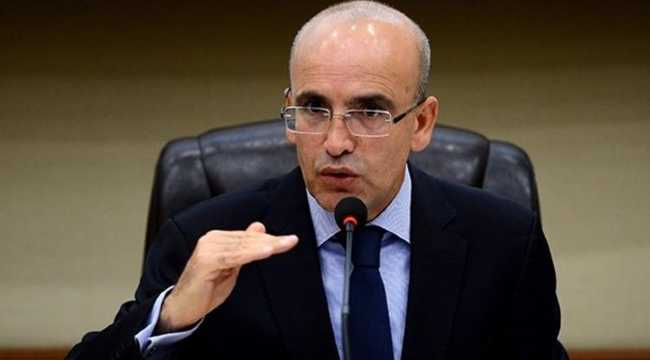
After the Economic Coordination Council (EKK) meeting held in Giresun, Turkey’s Treasury and Finance Minister Mehmet Şimşek spoke to reporters along with other EKK members. He emphasized that Turkey’s cash reserves are strong and that even without going to international markets, the country has the capacity to manage its finances.
Şimşek pointed out that since their economic program isn’t heavily reliant on portfolio investments, recent capital outflows aren’t a major concern.


He added that it’s still too early to fully analyze how domestic and global developments might impact the program’s targets long-term.
When it comes to inflation, Şimşek said there are both positive and negative effects from the recent market fluctuations. Still, they expect inflation to stay within the Central Bank’s forecast range.
He admitted there’s been a temporary deterioration in inflation expectations but remained optimistic. “Tighter financial conditions will help cool off demand-driven inflation. More importantly, we’ve seen a significant drop in commodity prices, especially oil. If these price levels hold, it will have a disinflationary effect,” he said.
As for the Turkish lira, he noted there’s been only a slight depreciation, and because demand isn’t very strong, the pass-through effect from the exchange rate to inflation should remain limited.
“Net impact on current account balance will likely be positive”
Şimşek also said that the recent developments could positively affect Turkey’s current account balance. While economic troubles in the EU might hurt exports, tighter financial conditions within Turkey could help curb imports, balancing things out.