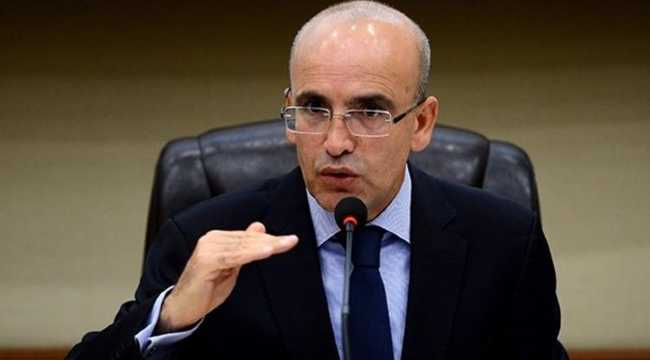
Treasury and Finance Minister Mehmet Şimşek highlighted that Turkey has significantly tightened public spending, stating that the share of expenditures covered by the savings directive has fallen from 4.6% of the budget to around 3%, marking nearly a 30% reduction in such current expenses. “We have reached the fiscal position we aimed for,” he said during a community meeting in London.
Global Uncertainty and Turkey’s Position


Speaking at the Union of International Democrats (UID) “UK Community Gathering,” Şimşek commented on the global economic atmosphere, noting that major global players like the US, EU and Japan have lost momentum in manufacturing.
He emphasized the shift: “We’re not indifferent to global developments, nor are we completely shielded from them. But Turkey is relatively more resilient. With a terror-free Turkey and deeper integration with our region, we stand to benefit the most from any rise in stability, peace and prosperity.”
Turkey Preparing for Opportunities
Şimşek pointed out that worldwide defense spending is expected to exceed 6 trillion dollars in the 2030s, adding that there is no reason for pessimism if Turkey stays prepared.
He stressed the necessity of a green transition:
“Over the last 24 years, Turkey has paid 1 trillion dollars for natural gas, oil and other fossil fuel imports—nearly twice our total debt stock. Renewable energy transformation in Turkey is accelerating.”
“Turkey’s Future Is Bright”
Şimşek stated that the current macro-stability and reform program aims to help Turkey grow stronger and faster:
“Our low level of indebtedness will greatly support our industrial, digital and green transformation. Turkey’s future is bright, and its potential is huge.”
He added that Turkey’s share in global GDP has doubled from 0.7% in 2002.
Turkey is also close to finalizing a much broader free trade agreement with the UK—this time covering services, public procurement and agriculture, not just industrial goods.
Trade with the EU is also expected to reach 230 billion dollars this year.
Single-Digit Inflation Target for 2027
Şimşek reaffirmed the government’s priority: restoring price stability.
“We aim to bring inflation back into single digits. It fell from 64% to 44%. By year-end it will drop to around 31%. Next year we aim for around 20% or below, and the year after that—single digits.”
He also noted that Türkiye has spent around 90 billion dollars so far in the earthquake zone.
Earthquake Zone Investments and Fiscal Discipline
Şimşek reminded that 350,000 out of 600,000 planned homes in the earthquake region have been completed, and 500,000 social housing units will help ease rental inflation.
He emphasized the public sector’s strict spending discipline:
“In the past, spending covered by the savings directive accounted for 4.6% of the budget. We brought this down to about 3%. That’s nearly a 30% cut in current expenditures. Now we’ll channel the created fiscal space into infrastructure, productive investments, and better public services.”
Reforms and Structural Transformation Ahead
Turkey’s risk premium has dropped from 700 basis points in mid-2023 to below 240.
Şimşek said major progress has been made, but more reforms are underway:
“There is intensive work on raising democratic standards and strengthening the rule of law. As our President said, 2026 will be a reform year. We want our gains to be permanent, and that requires structural transformation. This year, our country will likely enter the high-income group according to the World Bank. The goal is to advance much further with reforms.”
Turkish Treasury and Finance Minister Mehmet Şimşek highlights major improvements in fiscal discipline, inflation targets, reforms, and Turkey’s strategic economic outlook during his speech in London. He emphasizes reduced spending, green transition, strong resilience, and upcoming structural reforms.
Keywords
#MehmetŞimşek #TurkeyEconomy #Inflation #FiscalDiscipline #GreenTransition #UIDLondon #TradeAgreement #BudgetSavings #EconomicReform #SingleDigitInflation