“One of the World’s Most Successful Countries in Intangible Heritage”
Turkey ranks second worldwide on UNESCO’s Intangible Cultural Heritage List, according to Prof. Dr. Öcal Oğuz, President of the Turkish National Commission for UNESCO. Speaking to Anadolu Agency, Oğuz underlined Turkey’s strong position by saying, “Turkey is one of the most successful countries in the world in the field of Intangible Cultural Heritage.”
Oğuz made the remarks during the award ceremony of the Muğla Olive Blossom International Short Film Competition, organized by the Turkey Beyazay Association with the support of the Ministry of Culture and Tourism. He also noted that UNESCO’s 43rd General Conference had been held in Uzbekistan between October 30 and November 13.


Intangible Cultural Heritage Elements Reach 32
Highlighting Turkey’s recent achievements at UNESCO, Oğuz emphasized that Intangible Cultural Heritage was among the country’s most significant successes. He stated that the inclusion of “Antep embroidery,” which was evaluated and approved at a meeting held in India, had increased Turkey’s total number of registered Intangible Cultural Heritage elements to 32.
According to Oğuz, China currently ranks first on the list, followed by Turkey in second place, France in third, Iran in fourth, and Croatia in fifth.
UNESCO’s Efforts to Protect Living Languages
Oğuz stressed that language was humanity’s most important means of communication and that protecting languages also safeguarded cultures, geographies, and intangible heritage. He explained that UNESCO’s core mission focused on preserving diversity in several key areas.
He noted that UNESCO prioritized the protection of biological diversity, geological diversity, cultural diversity, and scientific diversity. Preserving cultural diversity, he said, was essential for protecting humanity’s future, while safeguarding scientific diversity enables new forms of knowledge and innovation.
Oğuz also drew attention to the importance of linguistic diversity, pointing out that UNESCO’s long-standing efforts to protect endangered languages had evolved into broader programs aimed at protecting all living languages. He warned that as languages disappeared, humanity risked becoming monolingual and monocultural, a process that could ultimately stifle creativity and lead to global stagnation.
Concluding his remarks, Oğuz emphasized that protecting biological, geological, cultural, scientific, and linguistic diversity was vital for the future of humanity.
Keywords: #UNESCO #IntangibleCulturalHeritage #TurkeyCulture #CulturalDiversity #UNESCOHeritage #LivingLanguages #AntepEmbroidery #GlobalHeritage
Transcript of the video: Antep Embroidery, A Living Heritage Passed from Mother to Daughter
The Soul of Gaziantep Woven into Fabric
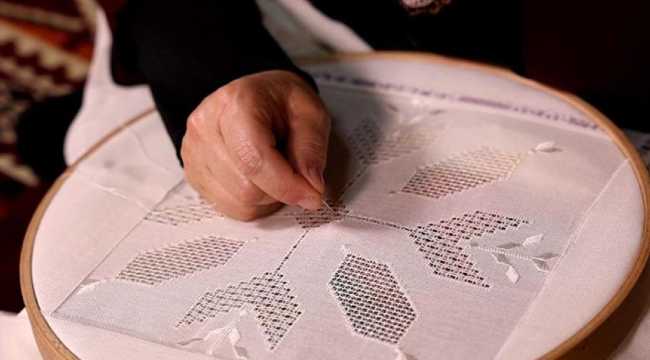
Antep embroidery, known locally as Antep işi, is far more than decorative needlework. Rooted deeply in Gaziantep’s cultural memory, this traditional craft reflects the emotions, aesthetic sense, and artistic refinement of the community. For generations, it has adorned dowries, wedding garments, and household textiles, carrying stories from the past into the present through delicate stitches.
A Craft of Patience, Skill, and Dedication
Antep embroidery is an art that demands intense labor and extraordinary precision. Often compared to threading a needle through patience itself, the craft requires meticulous workmanship and long hours of focused effort. Many artisans learned this skill from their mothers, who were not only their teachers but also their role models in resilience and creativity.
Gaziantep women approach their work like painters facing a canvas. What begins in the heart is first transferred onto fabric and then transformed into art. Traditionally, embroidery patterns were so valuable that they were never shared. Designs were guarded like state secrets, which led each artisan to develop her own unique motifs and styles. This secrecy, rather than limiting creativity, gave rise to remarkable diversity and originality.
From Wedding Attire to Dowries: A Timeless Tradition
Historical accounts suggest that Antep embroidery was first used in the mid-19th century, particularly in decorating bridal and groom attire in rural areas. Although the demanding nature of the craft and the time required have reduced its everyday popularity, Antep embroidery has never gone out of fashion.
The oldest surviving examples are found on wedding garments, and over time the craft became a central element of young women’s dowries. From bedspreads to room sets, these pieces were prepared from early childhood, each stitch reflecting care, hope, and cultural continuity.
From Local Craft to International Recognition
Through projects supported by the European Union and initiatives led by civil society organizations, Antep embroidery has gained international visibility. Educational and cultural activities carried out in countries such as France and Germany have helped introduce this traditional art to global audiences.
The efforts of women’s cooperatives in Gaziantep, supported by international organizations, have also drawn widespread appreciation. In 2016, Antep embroidery received geographical indication registration, officially recognizing its cultural and regional value. Its motifs, shaped by both geometric and natural forms, further emphasize its distinctive identity.
Cultural Heritage, Economic Power, and the UNESCO Path
Antep embroidery is not only a cultural legacy but also an economic lifeline. Passed down from mother to daughter and even from grandmother to granddaughter, it has contributed significantly to family incomes. For many women, the craft has supported household finances and enabled children—especially daughters—to continue their education, including university studies.
Preserving this heritage, passing it on to future generations, expanding its reach, and transforming Antep embroidery into a global brand are among the key goals of ongoing initiatives. By creating employment opportunities and contributing to the economy, the craft is seen as both a cultural and developmental asset.
Today, efforts are underway to secure its place on UNESCO’s Intangible Cultural Heritage List, aiming to strengthen its universal value and ensure that this art—where unspoken emotions are expressed through motifs—continues its journey from Gaziantep to the world.