


Source & Context
This article is based on a very important public youth research study conducted by a prominent research company MAK Danışmanlık (Consultancy), owned and directed by Mehmet Ali Kulat.
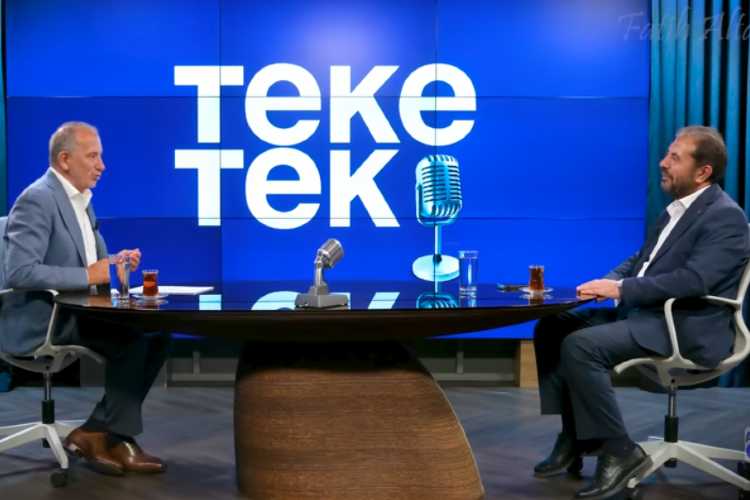
The findings were presented and discussed in an interview-style program hosted by journalist Fatih Altaylı on YouTube, where Mehmet Ali Kulat explained and interpreted the research results in detail. The discussion covered key themes including youth identity, political attitudes, economic expectations, social behavior, mental well-being, and migration intentions in Turkey.


The article below summarizes and restructures the core findings of that discussion into a structured analytical format.
Turkey’s young generation is going through a deep sociological transformation shaped by shifting identity patterns, economic pressure, changing political attitudes, and rising migration intentions. A comprehensive youth research study reveals a generation that is more connected, more aware, but also more uncertain about its future than previous ones.
This article brings together the key findings on how young people in Turkey define themselves, how they feel, what they expect from politics, and why a significant portion considers leaving the country.
Hybrid Identity: The End of Fixed Labels
One of the strongest signals from the research is the decline of rigid identity definitions among young people. Instead of choosing a single ideological or cultural label, many prefer flexible positioning.
23.2% define themselves as modern
16.3% define themselves as traditional
47.7% say “it depends on the situation”
10.4% describe themselves as partly modern, partly traditional
2.6% are undecided
This shows a clear shift: identity in Turkey’s youth is no longer fixed, but contextual. Young people are increasingly comfortable combining different value systems depending on topic, situation, or environment.
Atatürkism as a Shared Civic Identity
In political identity questions, Atatürkism emerges as a dominant reference point. However, it is not limited to a strict ideological framework.
Instead, it functions as a shared civic umbrella identity, where different political orientations converge:
nationalism
liberalism
conservatism
secular civic values
The key pattern here is not ideological purity, but overlapping identity layers. Young people do not reject labels, but they combine them.
Happiness Levels: A Generation Under Emotional Pressure
One of the most striking findings is related to emotional well-being.
Happiness distribution:
23% not happy at all
27% not happy
23.5% neutral
18.2% happy
7.8% very happy
More than half of young people report low happiness levels.
In addition:
66% experience sadness, stress, or emotional collapse at least occasionally
This points to a broader structural issue beyond individual psychology: a generation living under continuous economic and social pressure.
What Makes Young People Happy?
When asked what is necessary for happiness, the answers are highly revealing.
Top factors:
- Money
- Respect and social status
- Love
- Family
- Spiritual values
A notable shift is visible here: compared to earlier generations, money and status dominate emotional expectations, while love and spiritual values have declined in relative importance.
Rising Social Risks: Gambling and Substance Use
Regional findings highlight a rapid increase in social risks such as:
synthetic drug use
online and smart gambling systems
In some local studies, these issues have entered the top three societal problems, indicating a sharp rise compared to the last decade.
Strong Social Cohesion Despite Polarization Narratives
88.7% of young people say friends’ religion, political views, or sect do not matter
This indicates that despite political polarization debates, daily social relationships among youth remain highly inclusive and pragmatic.
Political Engagement Without Institutional Trust
75% of young people are interested in politics
77.9% believe political parties cannot solve youth problems effectively
Youth are politically aware but institutionally dissatisfied.
Employment Crisis and Economic Expectations
46.7% prioritize job creation if they governed the country
Employment preferences:
entrepreneurship is rising
public sector attractiveness is declining
Meritocracy Problem: Torpil Perception at 74.7%
74.7% believe favoritism (torpil) is more important than merit in employment
This reflects a systemic trust deficit in fairness and equal opportunity.
Freedom of Expression: A Divided Experience
43.2% feel they cannot express themselves freely
29.3% partially
15% fully free
Migration Intention: The Most Critical Signal
64% would leave Turkey permanently if given another citizenship
Preferred destinations:
Europe 43%
USA and Canada 39.8%
Scandinavia 14.3%
Turkey 0.4%
Middle East / Islamic countries 0.4%
Global Perspective: Climate First
- Climate change 25.8%
- Terrorism 14%
- Wars 13.5%
Family Structure: Communication Breakdown
daily family communication 5–7 minutes
rising child-centered household model
weakening traditional authority structures
Conclusion
The research describes a generation that is socially tolerant, politically aware, but emotionally strained and economically uncertain.
Key structural pressures:
employment insecurity
lack of meritocracy perception
migration intention
declining well-being
At the same time:
identity flexibility
social tolerance
political engagement remain strong
The overall picture is not collapse, but a structural tension between expectations and reality.
Video Source


