Shifting alliances in the Eastern Mediterranean and Europe’s evolving strategic calculus – Western Europe and the United States appear increasingly willing to build a defensive structure in the Eastern Mediterranean without including Turkey. While many in Turkey believe global dynamics are shifting in the country’s favor and that the West understands it cannot form a meaningful strategic community without Turkey, recent developments paint a more complex picture.
Turkey is undoubtedly a valuable partner for Western Europe, which seeks to play a major role in global politics. Yet Turkey’s unpredictable behavior in recent years has also raised concerns.
(An article by İlter TURAN published on ekonomim.com – Translated by BTT)
Despite allied warnings, Turkey insisted on purchasing S-400 missiles from Russia, explored membership options in BRICS, strengthened ties with the Shanghai Cooperation Organization, and even entertained ideas of leaving NATO in favor of a security structure with Russia and China. Although these ideas are often expressed out of political frustration, it is known that such thinking exists among key decision-makers.


Before concluding that the West must work with Turkey to maintain influence in the Eastern Mediterranean, it is useful to examine current developments. The US and European allies have begun shaping a defense line that excludes Turkey. As Turkey tightly upholds the Montreux Convention—which restricts naval access to the Black Sea for countries without Black Sea coastlines—the US has strengthened cooperation with Greece, Bulgaria, and Romania. Even though Bulgaria and Romania are EU members, the EU has been largely absent militarily in the region, leading it to support this US-led initiative.
Although excluding Turkey makes it difficult for the West to dominate the Black Sea and encircle Russia from the south, NATO—especially the US—is accustomed to operating under difficult conditions. It has also become clear that Russia no longer holds meaningful naval superiority in the Black Sea.
Economic borders and energy tensions in the Eastern Mediterranean
Energy tensions represent another major challenge. The Eastern Mediterranean hosts a significant natural gas potential, but disputes over exclusive economic zones remain unresolved. Israel, Egypt, Greek Cyprus, and Greece predetermined maritime boundaries without taking Turkey into account, ignoring Ankara’s objections. Turkey’s alternative proposal, which redefines maritime zones through a different mapping method and involves Libya, is still pending approval in the Libyan parliament.
Even though transporting the region’s gas through Turkey would be the cheapest and most logical route, Western actors continue searching for alternatives due to strong resistance to using Turkish pipelines.
The US push to reduce Europe’s dependence on Russian gas, combined with Washington’s insistence on sending Eastern Mediterranean gas through Greece, threatens Turkey’s goal of becoming a natural gas hub for Russian—and possibly future Iranian—gas headed to Europe. Limited Azeri gas and small volumes from Kazakhstan would not make TANAP a main corridor on their own.
US military expansion in Greek Cyprus raises new concerns
Another critical development for Turkey is that Greek Cyprus has become a regional center for both exploration and military operations. France has already increased its presence, and recently the US also selected Southern Cyprus as a strategic base for sustaining operations in the Eastern Mediterranean. Energy exploration efforts are also coordinated from there. Meanwhile, Russia’s attempt to establish a permanent naval base in Syria will face stronger resistance due to increased American and European activity in the region.
Interestingly, most of Turkey’s deep-sea drilling ships have been redirected to the Black Sea. At the same time, the Turkish navy avoids directly confronting US-affiliated energy vessels operating in contested areas that Turkey claims as its own maritime zones.
Conclusion
Although Turkey’s participation would strengthen Europe’s claim to being a universal power, ongoing geopolitical shifts show that Europe is also preparing scenarios where it remains influential without Turkey.

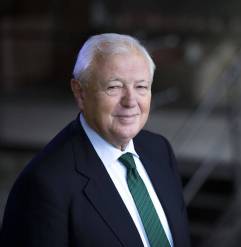
WHO IS ILTER TURAN?
Dr. İlter Turan is the President of the International Political Science Association (IPSA) and an Emeritus Professor in the Department of International Relations at Istanbul Bilgi University. He previously served at Istanbul University and Koç University. He has published numerous books and articles in Turkish and English on Comparative Politics, Turkish Political Life, and Turkish Foreign Policy.
He has been a visiting professor at several American and British universities and has served as the Rector of Bilgi University, President of the Turkish Political Science Association, Vice President of the International Political Science Association, and Chair of its World Congress. He is a columnist for Dünya Newspaper and holds positions on the boards of several foundations and companies.
Keywords: #WesternEurope #Turkey #EasternMediterranean #geopolitics #USpolicy #NATOstrategy #energysecurity #naturalgas #maritimeborders #GreekCyprus #BlackSea #MontreuxConvention #BRICS #regionaldefense #EUstrategy #MiddleEastpolicy #securityalliances #foreignpolicy #globalpower #strategicplanning