3,200-Year-Old Mystery Solved: What Does the Stone Inscription Found in Anatolia Reveal?
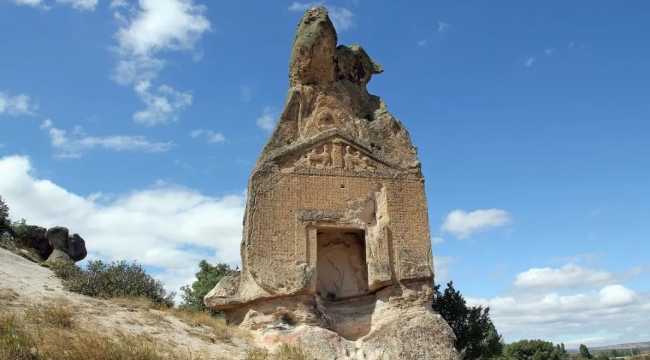
A stone inscription discovered in Afyonkarahisar in 1878 has shed light on one of the biggest mysteries in Mediterranean archaeology. According to related sources archaeologists have succeeded in deciphering the hieroglyphic script inscribed on a stone dating back 3,200 years. The inscription contains some of the oldest examples from the Bronze Age.
The writings, carved into limestone, offer information about the powerful and advanced civilizations of the Bronze Age in their early translations.

What Does the Stone Inscription Reveal?
The 10-meter-long stone tablet, inscribed in the ancient Luwian language, describes how the allied navies of western Anatolian kingdoms launched raids on coastal cities in the Eastern Mediterranean. Historians believe that the “pirate forces” mentioned in the inscription, belonging to a “naval confederation” played a role in the collapse of the newly emerging Bronze Age civilizations.
According to BBC Turkish, researchers believe the inscription was created in 1190 BCE under the orders of King Kupanta-Kurunta of the kingdom of Mira. The text also mentions that, prior to the end of the Bronze Age, the kingdom of Mira and other Anatolian civilizations invaded ancient Egypt and regions in the Eastern Mediterranean.
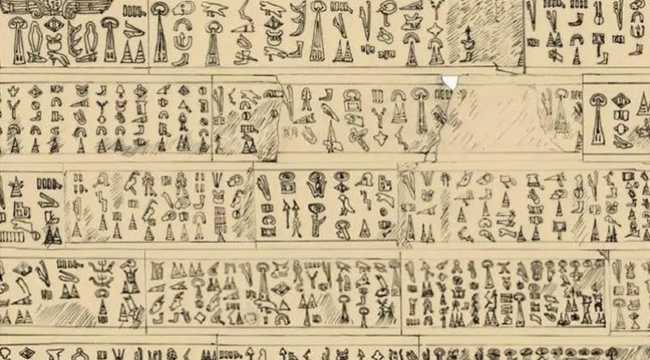
Archaeologists had long suspected that naval attacks were behind the sudden and uncontrollable collapse of great civilizations around 1200 BCE. However, the identity and origin of the attackers remained a mystery. The attackers were referred to as the “Trojan Sea Peoples,” but the mystery had remained unsolved for centuries.
How Was It Discovered?
The new findings were made by a team of Swiss and Dutch archaeologists. The translation of the text was done by Dr. Fred Woudhuizen, one of only 20 people in the world who can read the ancient Luwian language.
The 35 cm-high stone tablet was found in 1878 in the Beyköy village of Afyonkarahisar. After French archaeologist George Perrot made a paper copy of the inscription, local villagers used the original stone in the construction of a mosque.
A copy of the inscription was later found in the home of British historian James Mellaart in 2012. After Mellaart’s death, his son sent the copy of the inscription to Dr. Eberhard Zangger at the Luwian Studies Foundation. Zangger, a Dutch linguist and Luwian expert, explained that the inscription revealed how the Luwians of Anatolia supported the “Sea Peoples” in their raids, which contributed to the end of the Bronze Age in the Eastern Mediterranean.
The foundation noted that this discovery had solved one of the greatest mysteries in Mediterranean archaeology.
The translation and the researchers’ findings will be published in a scientific archaeology journal and a book in December.
TAGS: #travel #Turkey #tourism #stone #inscription #Afyonkarahisar #kingdom #Mira #Luwian #language #Dr #Fred #Woudhuizen