
Could Your Apartment Now Be a ‘Luxury Property’? A New Tax Controversy in 2026
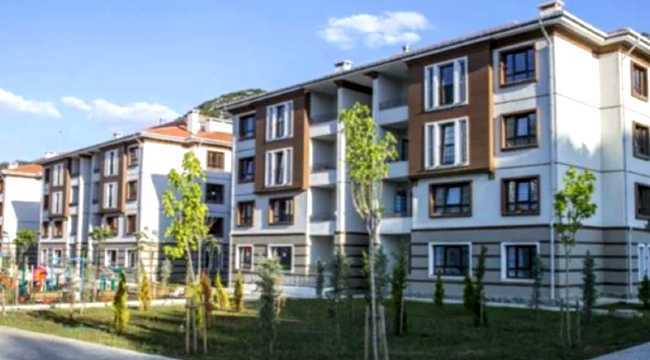
Turkey is heading toward a new real estate tax controversy, and it could hit average homeowners harder than ever before. As the reassessment of property tax values for the 2026–2029 period begins, there’s a growing storm over valuations increasing up to 40 times in some areas. While the debate is already heating up, experts warn the real conflict will erupt when these new taxes become payable in March–April 2026.
According to former finance officials, even standard apartment flats may now fall under the “luxury property tax” category—bringing along hefty tax burdens for homeowners. Experts are now calling for a full review of tax rates, warning that property tax is turning into a wealth tax.

Why the Sudden Spike in Property Taxes?
Yılmaz Sezer, Chairman of Güncel Group, attributes the drastic increase to Turkey’s soaring real estate prices in recent years. Although these reassessments are part of a routine four-year cycle, this round stands out due to the magnitude of the jump. According to TÜİK (Turkish Statistical Institute), between 2021 and 2024, construction costs surged by 650%, while land prices soared by 800%.
Since Turkey’s tax system treats market value and taxable value as the same, these dramatic price spikes have caused not only property tax but seven different taxes to spike as well. These include:
- Property tax
- Luxury Property Tax (Değerli Konut Vergisi)
- Title deed fees
- Stamp duty
- Inheritance and gift tax
- Contribution to preservation of cultural assets
- Capital gains tax (on sales and rental income)
Sezer warns that homeowners won’t just absorb the cost—they’ll likely pass it on through higher rents, further aggravating Turkey’s housing crisis, where rent already eats up up to 65% of family incomes.
What Are the Legal Grounds for Property Tax in Turkey?
Under Law No. 1319, all properties within Turkey’s borders—including buildings, land, and plots—are subject to taxation. The base value (tax assessment) is calculated based on:
- Construction costs (announced by the Ministry of Finance and Ministry of Environment and Urbanization)
- Land value
- Yearly increases are capped at half the Revaluation Rate
However, municipalities are not allowed to accept voluntary higher declarations of value. And here’s the kicker: there’s no upper limit for how high values can be set. This gives local commissions a dangerous amount of discretion.
A Recipe for Legal Chaos
These inflated values will be valid for 2026–2029 but will influence taxes in years to follow. Experts argue that unless values are reduced, there will be a flood of lawsuits as people challenge the sky-high valuations. Citizens have the right to file lawsuits within 30 days of notification. Due to court holidays, the final deadline to initiate legal action is September 8, 2025.
Looking back, a similar crisis in 2017 led to a legal amendment limiting value increases to no more than 50% over the prior period. Experts now suggest a similar legislative fix is urgently needed.
Beyond 2026: The Rise of the Luxury Property Tax
With property tax values aligning closer to market values, a standard apartment in a big city could soon fall under the Luxury Property Tax (Değerli Konut Vergisi), a separate levy introduced in recent years.
Ahmet Ozansoy, tax law expert, explains that Turkey’s property tax, originally designed as a nominal wealth tax, is now transitioning into a true wealth tax—the kind where people may be forced to sell assets just to pay the tax. This, he notes, disrupts the “silent pact” between citizens and the state: in the past, values were kept unrealistically low while rates were high, keeping the tax burden tolerable.
But now, with realistic valuations and unchanged high rates, even average homeowners may face severe financial pressure—especially in a high-inflation, low-real-income environment.
What Can Be Done?
Experts are urging the government to reconsider tax rates alongside value assessments. If property values are now closer to true market prices, tax rates must drop to reflect the original intention of the law: a light annual tax on wealth, not a financially crippling levy.
They also suggest a permanent cap system be built into the law, using metrics like inflation averages or revaluation rates to limit future hikes.
A Word of Warning
While the public is currently focused on the rising property tax, Ozansoy warns that few have realized what’s coming next: the Luxury Property Tax. This is separate from regular property tax, and will apply to homes above a certain value threshold starting in 2026—payable by February 2027, with rates ranging from 0.3% to 1%.
With inflation, even an average apartment might meet the threshold. So the tax burden isn’t just rising—it’s doubling.
Takeaway for Homeowners: Prepare Early
Whether you’re a landlord or a regular homeowner, this is not just a bureaucratic adjustment—it’s a shift in the financial landscape. If your property’s tax value has skyrocketed, you may need to:
- Review your new valuation carefully
- Consult legal or financial experts about your appeal rights
- Consider the long-term affordability of owning the property
- Prepare for higher taxes—and possibly higher rents
And don’t forget—September 8, 2025 is your legal deadline to challenge new valuations in court. (ekonomim.com)