Jerusalem Summit Between Israel, Greece and Southern Cyprus: “New Power Balances in the Eastern Mediterranean”
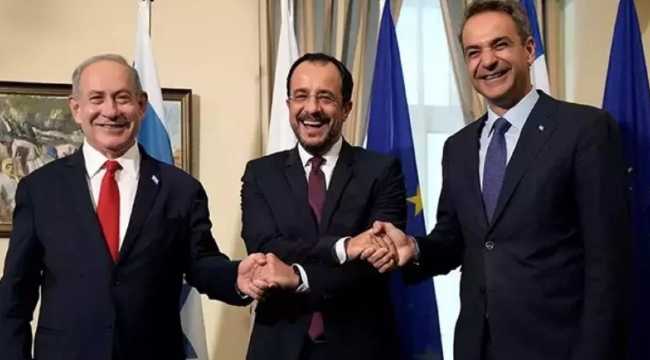
In a program aired on BirGün TV, the summit held in Jerusalem by Israel, Greece, and the Greek Cypriot administration was discussed in depth. Retired diplomat Engin Solakoğlu’s comments made it clear that this meeting concerned not only these three actors, but the entire Eastern Mediterranean region, with direct implications for Turkey as well.
A New Alliance or a Deepening Partnership?
It is important to underline that this was not the first time Israel, Greece, and the Greek Cypriot administration came together. The Jerusalem meeting was roughly the tenth round of such talks. For some time now, contacts have been ongoing, particularly around energy and security, and this latest summit signaled an intention to further strengthen cooperation.

According to Engin Solakoğlu, there is no formal alliance agreement on the table yet. Still, the level these relations have reached goes beyond a simple definition of cooperation. Each country has its own national calculations, but at the shared core lies an effort to build a balance that is unsettling for Turkey.
Energy, Arms, and Shifting Political Positions
Energy cooperation stands out as one of the main pillars of this process. Natural gas resources in the Eastern Mediterranean represent both economic opportunity and strategic leverage. At the same time, Israel’s decision to sell weapons to the Greek Cypriot administration shows that the military dimension of these ties is also expanding.
From Greece’s perspective, the picture is even more striking. Traditionally, Athens pursued a balancing policy in the Middle East and maintained a degree of sensitivity toward the Palestinian issue. With the Mitsotakis government, however, Greece has shifted toward a harder, more openly pro-American line. This orientation naturally brings closer ties with Israel. The recent momentum in relations between the Greek Cypriot administration and the United States fits into this broader trend.
Turkey and the Regional Impact
At first glance, this trilateral rapprochement may look like a bloc formed directly against Turkey. Solakoğlu argues, however, that the issue goes beyond Turkey alone. The broader aim appears to be tighter control over the Eastern Mediterranean and the peoples of the Middle East. Turkey, due to its regional weight and its interests in the Eastern Mediterranean, inevitably becomes part of this larger equation.
At the same time, it is emphasized that Turkey’s own policies in recent years have contributed to its growing isolation in the region. Diplomatic missteps and contradictory rhetoric have made it easier for such blocs to take shape.
The Debate Over Energy Sharing in the Eastern Mediterranean
Energy is perhaps the most critical element of this cooperation. While extracting fossil fuels poses serious environmental risks for a fragile sea like the Eastern Mediterranean, major actors tend to view the issue mainly through an economic and geopolitical lens.
Israel’s agreement with Egypt, which involves transporting Israeli natural gas to Egypt for liquefaction, clearly points to Europe as the ultimate target market. Europe’s energy troubles following tensions with Russia have turned the Eastern Mediterranean into a potential alternative source. Despite this, Turkey’s geographic position and existing infrastructure continue to make it a key and unavoidable player in energy transportation.
Who Are the Security Threats?
Statements following the summit highlighted increased cooperation against threats to sea routes and critical infrastructure. Many analysts argue that Turkey is not the primary threat being referenced here. The more serious concern is the expansion of conflicts in the Middle East and the transformation of Cyprus into a military and logistical hub.
In particular, if tensions between Iran and Israel were to escalate further, Cyprus and surrounding maritime routes could become targets. Such a scenario would significantly raise tensions across the Eastern Mediterranean.
The Road Ahead: Cyprus Back on the Agenda
According to Solakoğlu, the Cyprus issue is likely to become the most important development in the Eastern Mediterranean in the near future. A new negotiation process, under United Nations auspices and involving Turkey, the United Kingdom, Greece, and the parties in Cyprus, appears to be approaching.
The ultimate aim of this process is not only to reach an agreement on the island, but also to establish a framework that more smoothly serves Western and capital interests in the Eastern Mediterranean. For this reason, the meaning of “peace” in Cyprus remains open to debate from the perspective of the region’s peoples.
Final Thoughts
The Jerusalem summit signals a reshuffling of the cards in the Eastern Mediterranean. Energy, security, and diplomacy are becoming increasingly intertwined. How Turkey positions itself amid these shifting dynamics will remain one of the most critical questions in the period ahead.
Keywords: #JerusalemSummit #EasternMediterranean #Israel #Greece #GreekCypriotAdministration #EnergyPolitics #RegionalSecurity #Turkey #CyprusIssue #Geopolitics
Source Engin Solakoğlu (Birgün TV) – Translated into English by BTT