
The History of Kültepe May Date Back 8,000 Years
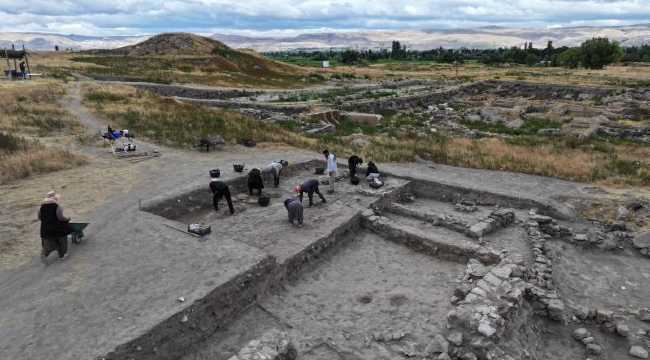
Archaeological excavations at the Kültepe Kaniş/Karum Mound—where the history of Anatolian people’s interaction with writing and trade can be traced back 6,500 years—suggest that the region’s history may extend as far back as 8,000 years.
The excavations, which were initiated in 1948 by Prof. Dr. Tahsin Özgüç, are currently led by Prof. Dr. Fikri Kulakoğlu from the Faculty of Language, History, and Geography at Ankara University.

So far, archaeologists have unearthed 23,500 written tablets, most of which are commercial documents belonging to Assyrian merchants.
Evaluating this year’s work, Prof. Dr. Kulakoğlu stated that excavations are ongoing both in the Karum area and on the mound itself. He emphasized that despite nearly 78 years of excavation, less than 5% of the current archaeological site has been unearthed, indicating that Kültepe needs to be excavated for many more decades—if not centuries.
Uncovering More Than Artifacts
Kulakoğlu explained that this year’s aim is to answer various questions by continuing excavations in the Karum area, where Assyrian merchants lived, established a trade system, and coexisted with the local population. He noted that modern archaeological work doesn’t just focus on artifacts but also analyzes dust and soil samples, which can provide insights into ancient vegetation and animal species. Human bones found in burial sites can even reveal illnesses from that period.
“Some Are Court Rulings”
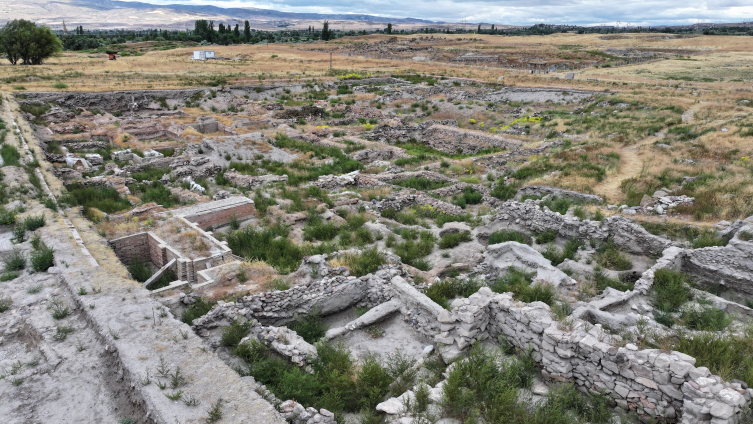
Kulakoğlu described excavations in mudbrick houses from that era, saying, “We are excavating entire houses. From these, we evaluate the remaining archaeological objects and conduct analyses to understand their origins, how and where they were produced. If we come across any archives, we aim to verify their stories through written records.”
He highlighted that many tablets have been found in the Karum area—written either by the homeowners themselves or received as letters. “Some are even court rulings,” he said. “For example, in an inheritance case, all items inside a house—containers, gold, silver—are listed and recorded on a tablet. We’re investigating whether the inventory details on these tablets can be confirmed through archaeological finds.”
“Kültepe Also Sheds Light on World History”
Kulakoğlu noted that Kültepe was already a significant settlement even before the Assyrian merchants arrived. “We aim to uncover the conditions of Kültepe and Anatolia before the arrival of the Assyrian merchants by examining the remains inside homes and monumental structures using various interdisciplinary methods,” he said.
These efforts are being carried out under the Ministry of Culture and Tourism’s Legacy for the Future project. The research conducted so far provides valuable insights into the history of Kültepe, Kayseri, and Anatolia as a whole. According to current findings, the earliest known period in Kültepe dates to the Chalcolithic Age, approximately 6,500 years ago. However, Kulakoğlu emphasized that there’s no reason why excavations couldn’t push this date back to 7,000 or even 8,000 years. Deeper layers require more delicate work, but advances in technology now allow for the analysis of even micron-scale findings.
A Unique Historical Resource
Kulakoğlu concluded by emphasizing the global significance of the excavations:
“Kültepe, with all its layers and findings, is a center that illuminates the history of the entire Near East. It can provide information not available from Mesopotamia or Syria. In this regard, continuing the excavations is essential. Kültepe not only sheds light on the history of Anatolia but also on the history of the world.”