Two Timeless Legacies Carried into the Future: İş Bank Supports Excavations in Denizli’s Ancient Cities
The deep-rooted cultural heritage of Anatolia, cradle of countless civilizations, continues to emerge through archaeological discoveries. Türkiye İş Bankası has long supported scientific excavations aimed at preserving and contributing these ancient values to global heritage—and now, it’s expanding that commitment even further.
The bank has recently announced its support for two major excavation projects in Denizli, offering financial and institutional backing for five years. The ongoing archaeological work at Laodikeia and Tripolis, two of the most historically significant ancient cities in the region, is being led by renowned scholars: Prof. Dr. Celal Şimşek at Laodikeia and Prof. Dr. Bahadır Duman at Tripolis.

“A Deep Commitment and Effort”
Suat Sözen, Deputy General Manager of İş Bank, emphasized the importance of these long-term archaeological efforts, which aim to trace the footsteps of ancient civilizations and add to the world’s collective cultural wealth. He pointed out that archaeology is not just a passing interest for the bank, but a dedicated area of corporate social responsibility, especially through İş Sanat, the bank’s cultural platform.
A Legacy of Support
To date, İş Bank has supported excavations in numerous ancient sites across Turkey—such as Zeugma in Gaziantep, Patara in Antalya, Teos in İzmir, Nysa in Aydın, Stratonikeia in Muğla, and Kaman-Kalehöyük in Kırşehir. These collaborations have helped reveal artifacts and insights that enrich both national identity and world heritage.
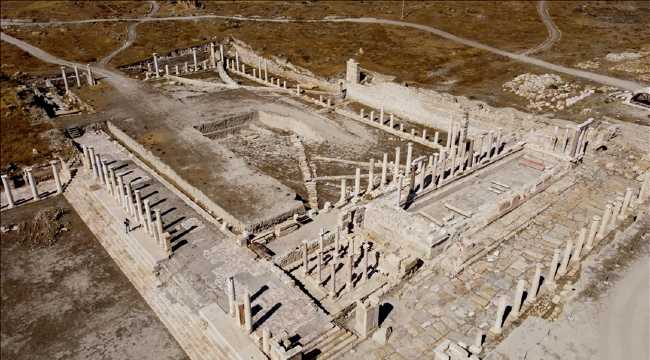
The newly supported sites in Denizli are no exception. Both Laodikeia and Tripolis offer traces of civilizations like the Lydians, Phrygians, Romans, and Byzantines. With grand theaters, agoras, columned avenues, and other monumental structures, these cities silently bear witness to a rich and layered past.

Tripolis: A Continuous Journey Through Time
According to Prof. Dr. Bahadır Duman, Tripolis has been under excavation since 2012 under the supervision of Pamukkale University and the Ministry of Culture and Tourism. It’s also part of the ministry’s “Legacy for the Future” project. The city shows signs of continuous settlement from as early as 5500 BCE up to the 1920s. By the 2nd and 3rd centuries CE, Tripolis had an estimated population of 20,000–25,000, thriving economically—especially through olive cultivation.
Laodikeia: A Shining Star of the Lykos Valley
Laodikeia’s excavation efforts date back to 2003. Prof. Dr. Celal Şimşek noted that the work gained significant momentum in 2013, earning the site a place on UNESCO’s Tentative World Heritage List. The meticulous restoration of the Laodikeia Church in 2016 even won the prestigious Europa Nostra Award from the European Union.
Spanning 8 square kilometers, Laodikeia reveals the bustling commercial life of ancient Denizli and includes references to athletic games second only to the Olympics in Olympia. The city is seen as a beacon of the Lykos (Çürüksu) Valley, offering a remarkable window into the past.
A Future Built on the Past
With this support, İş Bank is helping ensure that these invaluable cultural assets are not only uncovered but also preserved for future generations. The ongoing work in Tripolis and Laodikeia isn’t just about history—it’s about connecting today’s world with the voices of the past and safeguarding them for tomorrow.