
Will Speed Limits on European Motorways Be Cut to 100 km/h?
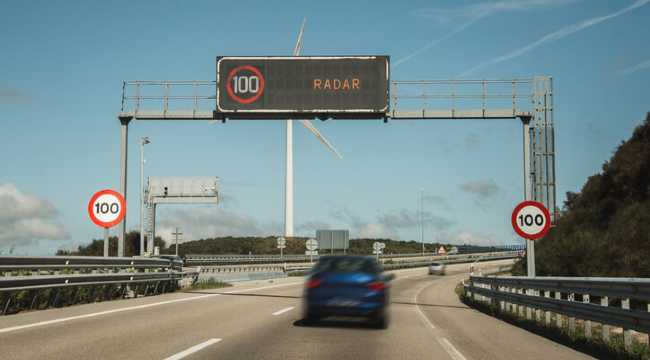
A proposal from Austria to reduce speed limits on motorways across Europe to 100 km/h has sparked a new debate over road safety, fuel consumption and dependence on imported oil.
Günther Fehlinger-Jahn, chairman of the Austrian NATO Enlargement Committee, has called for a maximum speed limit of 100 km/h on all motorways and expressways across the European Union.

The proposal, which has also been discussed on social media since March, is being justified on the grounds of reducing fatal and serious-injury crashes, saving fuel and cutting dependence on imported oil.
No Official EU Proposal or Agenda
The proposal is not currently on the official agenda of the European Union. Nor does it constitute a legislative proposal or draft directive.
Under EU rules, setting maximum speed limits and regulating road traffic largely remain the responsibility of individual member states. While the European Commission shares competence in the field of transport, there is currently no binding EU-wide framework requiring member states to adopt a common motorway speed limit.
For a speed limit to be introduced at EU level, the European Commission would first need to make an official proposal, followed by approval from the European Parliament and the Council of the EU. Member states would then have to incorporate the new rules into their national legislation.
The Commission has also emphasised that speed limits are better determined flexibly, taking into account factors such as road design, traffic density and environmental conditions.
Current Speed Limits Vary Across Europe
Motorway speed limits currently vary from 110 km/h to 130 km/h in most EU member states.
Germany has no general maximum speed limit on its motorways, although 130 km/h is the recommended speed. Austria, where the proposal originated, also retains a standard motorway speed limit of 130 km/h.
The Netherlands is among the countries that impose a 100 km/h motorway limit during certain hours of the day in an effort to improve air quality and reduce emissions. Several other European countries use variable speed limits displayed on electronic signs rather than relying solely on fixed limits.
Fuel Savings and Public Opinion
Fuel savings are one of the main arguments behind the proposal. However, experts at the Austrian Automobile Club (ÖAMTC) say that while individual motorists could save some fuel by driving at lower speeds, the overall impact on national fuel consumption would be limited. According to the club, the reduction in total consumption would amount to only a few percentage points.
An ÖAMTC public opinion survey conducted in April 2026 also showed limited support for the proposal. While 68% of respondents favoured retaining the current 130 km/h speed limit, only 11% supported reducing the motorway limit to 100 km/h.
For now, therefore, the 100 km/h proposal is not an EU policy or an official EU initiative. It remains a proposal being debated in the wider discussion over road safety, energy consumption and environmental policy.