
3I/ATLAS to Make Its Closest Approach to Earth on December 19: What Will Happen?
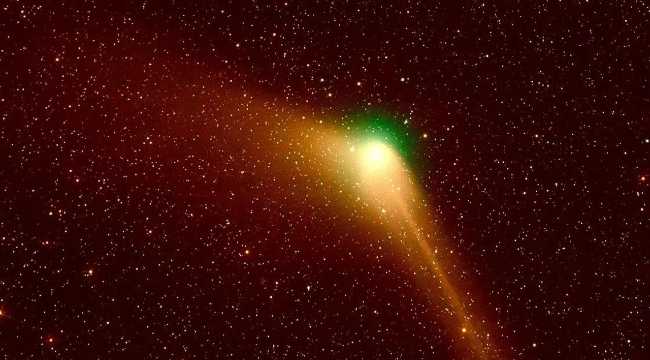
A Rare Interstellar Visitor Passes by Our Planet
The interstellar comet known as 3I/ATLAS, which originated outside our Solar System, will make its closest approach to Earth on December 19. Scientists hope this safe flyby will offer valuable clues about how planets form around other stars.
On Friday, December 19, interstellar comet 3I/ATLAS will pass its closest point to Earth, marking a critical moment in the journey of one of the most extraordinary objects ever to visit our Solar System.

The Third Confirmed Interstellar Object Ever Observed
Discovered in July in Chile by NASA-funded ATLAS telescopes, 3I/ATLAS is only the third object ever confirmed to have entered our Solar System from interstellar space. Previously, 1I/‘Oumuamua passed through in 2017, followed by 2I/Borisov in 2019. The comet’s trajectory clearly shows that it originated beyond our Solar System and will eventually return to interstellar space.
A Safe Yet Scientifically Valuable Close Encounter
According to data from the European Space Agency (ESA), during its closest approach 3I/ATLAS will come within approximately 270 million kilometers (about 168 million miles) of Earth. This distance is nearly twice the average distance between Earth and the Sun, meaning the comet poses no threat to our planet or any other in the Solar System.
Despite being safely distant, the flyby presents a major scientific opportunity. Astronomers will observe the dust and gases released from the comet’s icy nucleus as it is heated by the Sun. This rare observation window may provide invaluable insights into how comets and planetary material form around other stars.
In recent months, numerous space agencies and observatories — including the Hubble Space Telescope and the Jupiter-exploring JUICE mission — have turned their attention to this fast-moving interstellar visitor. For those interested in watching the event, the Virtual Telescope Project, hosted by Gianluca Masi, will offer a free live stream on the evening of December 18 (early morning of December 19, Turkey time), allowing viewers worldwide to witness this rare cosmic encounter online.
Keywords: #3IATLAS #InterstellarComet #SpaceScience #AstronomyNews #SolarSystem #ESA #NASA #HubbleSpaceTelescope #VirtualTelescopeProject