A 1,800-Year-Old Water Distribution System Unearthed at Zerzevan Castle
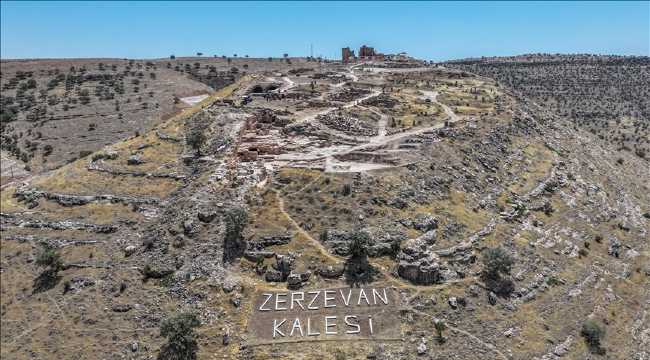
Published archaeological reports reveal an exciting new discovery at Zerzevan Castle in Diyarbakır, where a 1,800-year-old water distribution system from the Roman Empire has been brought to light. Known as a major military settlement and home to the last known Mithras Temple in the world, this ancient stronghold continues to unveil its secrets through ongoing scientific excavations.
A Historic Fortress That Keeps Giving

Located 13 kilometers from Diyarbakır’s Çınar district and perched on a rocky hill 124 meters high, Zerzevan Castle has been a hub of archaeological interest. Added to the UNESCO World Heritage Tentative List in 2020, the site attracts thousands of visitors each year while excavations progress year-round.
Since the start of systematic digs in 2014—supported by multiple government institutions, universities, and organizations—researchers have uncovered remnants of walls, towers, churches, residences, grain and weapon depots, rock-cut tombs, water channels, 63 cisterns, a vast underground shelter for 400 people, hidden tunnels, and the extraordinary Mithras sanctuary.
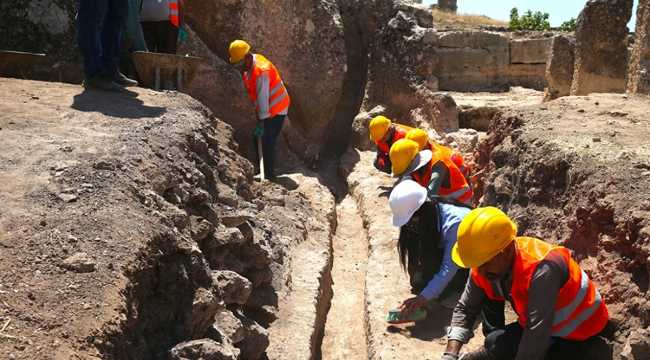
Now, an impressive piece of Roman engineering has emerged: a complex water distribution system dating back 1,800 years.
“A Remarkable Roman Engineering Marvel”
Prof. Dr. Aytaç Coşkun, head of the excavation team, emphasized the importance of the newly unearthed system. According to Coşkun, Zerzevan Castle—whose history stretches back to the Assyrians—contains one of the most sophisticated water infrastructures of its time.
Researchers have identified major water channels outside the fortress walls and documented 63 cisterns within the settlement. The largest cistern, featuring a vaulted architectural structure, has the capacity to hold 4,000 tons of water.
Water was channeled from three now-dry springs located 8.5 kilometers away through aqueducts and channels, stored first in the large vaulted cisterns, then distributed to residential areas and even to the Mithras Temple.
For the first time, the castle’s full internal water distribution system has been uncovered, offering answers to long-standing archaeological questions about daily life and survival strategies during sieges.
Evidence of a Pressurized Water System
One of the most striking discoveries is the presence of ancient künk pipes—baked clay water pipes. These show that the Romans used a pressurized system to transport water to higher elevations inside the fortress.
“Thanks to these pipes, water could be pushed upward under pressure,” Coşkun explained. “In the large cistern, engineers even created a small waterfall-like feature before the water flowed into the distribution channels.”
This engineering allowed water to reach every part of the settlement, including strategic and religious structures.
Water Bottles From the Past
During the excavation of the distribution system, archaeologists also found fragments of ancient flasks and water bottles used by soldiers and residents. These artifacts shed light on how people stored and carried water in daily life—vital in a military settlement prone to sieges.
Coşkun noted that Zerzevan’s cisterns held tens of thousands of tons of water, enough for over 10,000 people to survive inside the fortress for a full year without leaving. This was crucial, as the population of roughly 1,600 could swell dramatically during wartime when civilians from surrounding areas took shelter underground.
A Fortress With Deep History
Strategically positioned between Amida and Dara, Zerzevan Castle controlled a key section of an ancient trade route. The site witnessed fierce clashes between Roman and Sasanian forces and served as a major frontier garrison.
Its origins date back to the Assyrian period, with the main Roman military settlement established in the 3rd century AD. The fortress remained in continuous use until its conquest by Islamic armies in 639 AD. Much of what stands today was repaired or rebuilt under the Byzantine emperors Anastasius (491–518 AD) and Justinian (527–565 AD).
Keywords: #ZerzevanCastle #RomanEngineering #Archaeology #Diyarbakır #MithrasTemple #WaterSystem #UNESCO #AncientHistory #Turkey #HistoricalDiscovery