Denizli City: One of the destinations with highest number of ancient towns, in Turkey

Denizli is a city rich in both natural beauty and cultural heritage. To date, 19 ancient cities and nearly a thousand cultural assets have been identified in this region. Here is interesting content about some historical assets Denizli offers to its visitors.
A LAND OF CIVILIZATIONS

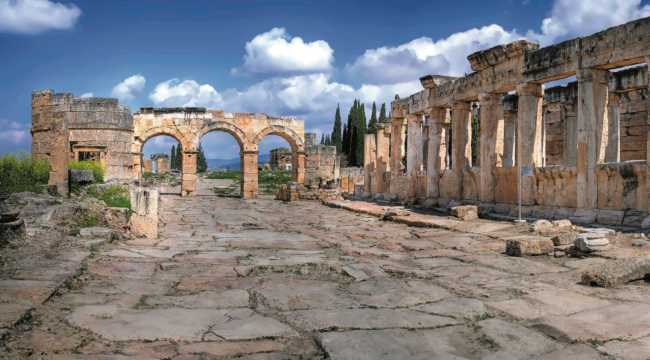
With a history as ancient as Anatolia itself, Denizli has been continuously inhabited since the Chalcolithic (Copper) Age. Over centuries, it has been home to various civilizations, from the Hittites to the Phrygians, Lydians, Persians, Macedonians, Byzantines, and finally the Ottomans. Today, the remnants of these civilizations, especially the numerous ancient cities, stand as a testament to Denizli’s rich past.
Thanks to its geographical location, Denizli also boasts stunning natural landscapes, offering visitors a wealth of places to explore beyond its historical sites.
EXPLORING DENIZLİ: A WEEKEND WOULD NOT BE ENOUGH TO SEE ALL ATTRACTIONS
If you only have a weekend to visit Denizli, that would not be enough to see the entire city. You’ll be able to cover only a few key spots. To fully appreciate Denizli’s history, nature, and cultural heritage, one might need a few more days.
One should dedicate one Day to Pamukkale for instance.
You can start your tour with Pamukkale, located 18 km north of the city center. This UNESCO World Heritage Site is a unique combination of natural and archaeological wonders. The stunning travertine terraces of Pamukkale merge with the ancient city of Hierapolis. Just 5 km away is Karahayıt thermal springs, known for their healing properties. You can visit these three places—Pamukkale travertines, Hierapolis, and Karahayıt—by taking a bus from the city.
HIERAPOLIS: NEAMED AFTER THE AMAZON QUEEN HIERA
Hierapolis, which means “Holy City” due to its many temples, was also a significant center for Christianity in the 1st century AD. The Apostle Philip was martyred here, making it a place of pilgrimage. Today, it’s a popular destination for religious tourism. Listed as both a natural and cultural heritage site by UNESCO in 1988, Hierapolis charges an entrance fee.
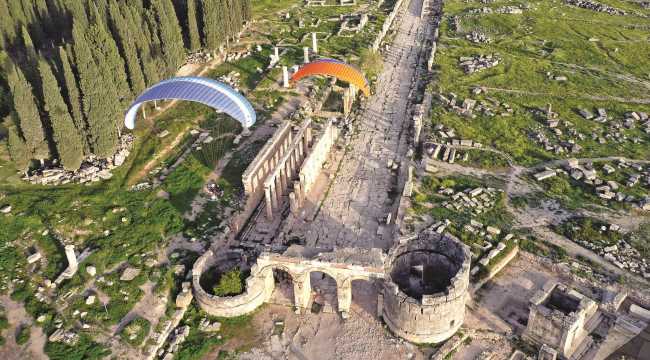
As you enter the ancient city, you’ll be greeted by grand arches and narrow streets. If you visit in spring, vibrant poppy fields enhance the experience. Walking along the path, you’ll pass through a series of ancient tombs, eventually arriving at the grand Hierapolis Theater. Continue along the main road, and you’ll come across the famous Antique Pool, also known as Cleopatra’s Pool. Swimming in this ancient, column-lined pool is a unique experience, but there is an additional fee.
Further down the road is the Archaeology Museum, showcasing impressive artifacts from the ancient city. Although the Antique Pool is outside the main city area, it’s a sight not to miss.
PAMUKKALE TRAVERTINES
After exploring Hierapolis, the stunning white travertines of Pamukkale will take your breath away. Visitors can walk barefoot down the terraces, offering the chance to take amazing photos of this natural wonder. At the base of the travertines is the city center, where you’ll find restaurants, souvenir shops, and even hot air balloon and paragliding offices for the more adventurous.
Plan Your Visit to Pamukkale
A trip to Pamukkale can be exhausting, so you could either need to rush through it or, preferably, stay overnight to enjoy a more relaxed visit. There are plenty of accommodation options, from five-star hotels to more affordable pensions. Many hotels offer thermal spa services, so you might want to indulge in a hot spring bath or a mud treatment, which could have healing benefits. In short, Pamukkale offers a wide range of accommodations to suit any budget and preference.