
Is There Really a Security Problem in the Black Sea as Claimed by Western Circles?
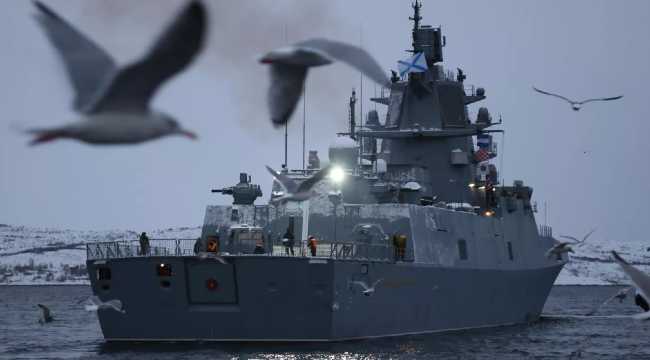
There’s a growing effort—especially from Western circles—to frame the Black Sea as a region with escalating security risks. Over the past few months, conferences and panels have popped up addressing this very issue. One such event was held last week by a think tank in Romania. On the surface, that might sound like a good thing—open dialogue, strategic discussions—but something about it feels a bit off.
Despite its long coastline along the Black Sea, Russia isn’t even invited to these discussions. That’s not an oversight. It’s very much by design. The logic is clear: those raising alarms about a security threat in the region are also the ones pointing directly at Russia as the source of that threat. So in reality, these events are less about security, and more about forming a front against Russia.

The U.S. Push for a Stronger Presence—and Turkey’s Resistance
The United States sees the Black Sea not as a shared maritime zone, but as a potential staging ground to contain Russia. Washington would like to have a stronger military presence in the region, and that means more warships, more bases, and more involvement.
But there’s a legal obstacle: the Montreux Convention. Turkey, which oversees access to the Black Sea through the Bosporus and Dardanelles, strictly enforces the agreement, which limits how long foreign warships can stay in the Black Sea and under what conditions they may enter. So far, Turkey has resisted American pressure to bend the rules—insisting on compliance, even when Washington pushes otherwise.
As a workaround, the U.S. has expanded its military footprint in NATO-member states like Greece, Bulgaria, and Romania. The latter two, once under the Soviet sphere of influence, are understandably nervous about becoming targets again and are actively seeking security guarantees—often by inviting a greater Western military presence.
Can the EU Really Be a Strategic Actor in the Black Sea?
Bulgaria and Romania aren’t just leaning on the U.S.; they’re also trying to bring the European Union into the fold as a key player in Black Sea security. But here’s the problem: the EU isn’t a unified nation-state. It’s a bloc of 27 countries with different foreign policies, military capabilities, and strategic interests. So far, the EU has shown little ability to act decisively in external conflicts.
Some member states are more hawkish toward Russia, others more cautious. There’s no single European voice when it comes to dealing with Moscow. That makes the idea of the EU as a major Black Sea power seem, at best, wishful thinking.
And here’s a thought worth considering: maybe when people talk about “the EU” playing a bigger role, what they really mean is Germany. It wouldn’t be surprising. Germany has been quietly positioning itself as Europe’s central power again, especially in Eastern Europe. Understandably, Berlin doesn’t want to draw too much attention to this. Historical anxieties about German dominance in Central and Eastern Europe haven’t completely gone away, even decades after World War II.
Russia’s View: The Black Sea as a Vulnerable Flank
So let’s ask the core question: Is there a real security problem in the Black Sea? To answer it honestly, we need to acknowledge two things. First, Russia and Turkey have the longest coastlines in the region. Naturally, they’re the most invested in maintaining Black Sea stability.
From the Russian perspective, the Black Sea is a vulnerable flank—a soft underbelly they don’t want exposed. They fear being attacked from this direction by foreign powers. Despite their strategic concerns, Russia doesn’t actually have a massive naval presence in the area. Turkey, on the other hand, has helped ease these tensions by strictly upholding the Montreux Convention, ensuring that no surprise military buildup from external forces catches Moscow off guard.
But if foreign warships were to start showing up in larger numbers, Russia would almost certainly respond by ramping up its military presence. That’s how you go from no real threat to an actual arms race—and a completely avoidable one at that.
Russia Isn’t Innocent, But the Risk Is on Land, Not Sea
Now, let’s be clear: Russia isn’t an innocent actor. Its track record speaks for itself. In both its Soviet and modern iterations, Russia has redrawn borders by force. It annexed parts of Georgia—mainly lands with Circassian populations—and absorbed them into its existing federal republics. The 2014 annexation of Crimea, though justified by Russia on security grounds, was condemned almost universally.
Now, Russia is deeply entrenched in a war with Ukraine, and one of the main reasons it cited was Ukraine’s growing ties with NATO. Yes, Russia has expansionist ambitions. That’s a reality no one should ignore. But what’s also true is that Russian aggression typically unfolds on land, through ground operations led by the army—not through maritime campaigns.
If you’re serious about deterring Russia, land-based defense strategies make more sense than flooding the Black Sea with warships.
Creating a Crisis That Doesn’t Exist
So here’s the irony: the more we talk about a “Black Sea security problem,” the more likely we are to create one. By encouraging foreign powers—especially an unpredictable America—to get involved, we risk manufacturing the very crisis we say we’re trying to avoid.
Let’s not forget, no one is quite sure what direction U.S. foreign policy will take next. Including Washington in the mix might sound like a smart deterrence tactic, but it could just as easily lead to unintended consequences.
Before rushing into strategic overhauls or military buildups, it would be wise for those promoting new Black Sea security agendas to pause and reflect: Are we solving a problem, or building one from scratch?
from article by İlter TURAN on ekonomim.com (translated and edited by BTT)