New discovery at Karahantepe, one of the most important Neolithic settlements
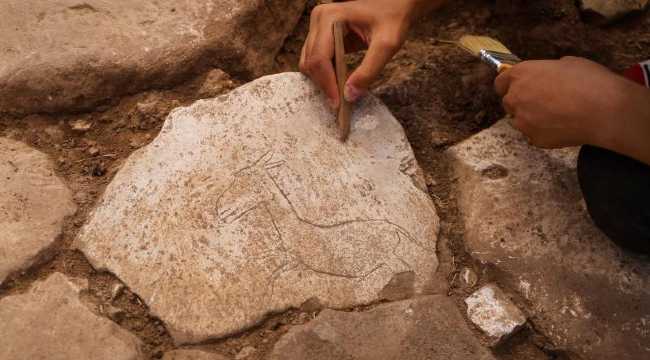
Minister of Culture and Tourism Mehmet Nuri Ersoy announced that a depiction of a running wild donkey had been discovered on the floor of a hut during the excavations at Karahantepe. In his social media post, Minister Ersoy mentioned that Karahantepe, one of the most important Neolithic settlements, continued to shed light on the depths of history, and that the “Stone Hills” project was still illuminating world history.
Minister Ersoy shared that the depiction of the running wild donkey had been found on the floor of a hut at Karahantepe and stated, “The artifact, discovered just before the World Neolithic Congress, which will be held for the first time in Şanlıurfa, is one of the rare examples reflecting the art of its time. I thank our Excavations and Research Department teams for bringing this unique artifact to light.”

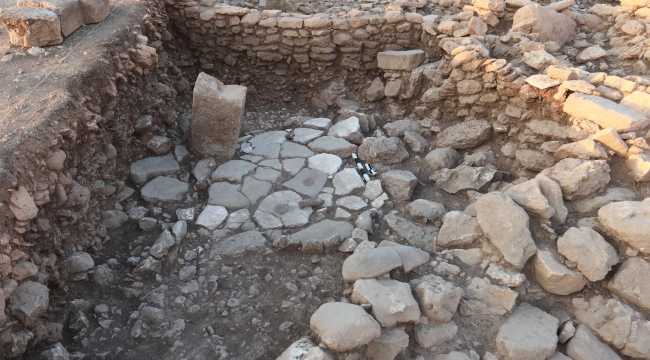
Karahantepe
Karahantepe is located 60 kilometers east of Şanlıurfa. Şanlıurfa, believed to be the ancient city of Ur Kaśdim (City of the Chaldeans), has a history spanning 12,000 years. The region proudly showcases the heritage of all the advanced civilizations that have developed in the area.
Şanlıurfa is considered sacred by Jews, Christians, and Muslims alike. According to the Old Testament, the Prophet Abraham, known as the “father of the three monotheistic religions,” was born in the city of Ur Kaśdim and migrated with his family to Harran, known as the “House of the Patriarchs.”
During the 2nd millennium BC, the lands of Şanlıurfa were part of the Hurrian Kingdom. Some believe that the Prophet Abraham was born in a cave near the Mevlid-i Halil Mosque. The region and the cave are therefore considered sacred.
It is interesting that so many Neolithic sites, such as Göbeklitepe, Karahantepe, and Nevali Çori, are located in such close proximity. Recent archaeological studies suggest that Karahantepe might even predate Göbeklitepe, potentially making it the oldest known Neolithic site in the world. Like Nevali Çori and Göbeklitepe, Karahantepe features a similar settlement plan.
To date, nearly 250 T-shaped pillars have been unearthed. As part of the “Göbeklitepe Culture and Karahantepe Excavations” project, surface surveys began two years ago in the area known locally as “Keçilitepe” under the direction of Professor Dr. Necmi Karul, with support from Istanbul University. Karahantepe and the entire Şanlıurfa region continue to reshape our understanding of known history.