Strategic importance of Russia’s military bases in Syria and its relationships in region suggest Moscow’s Middle Eastern ambitions will persist despite fall of Assad in Syria
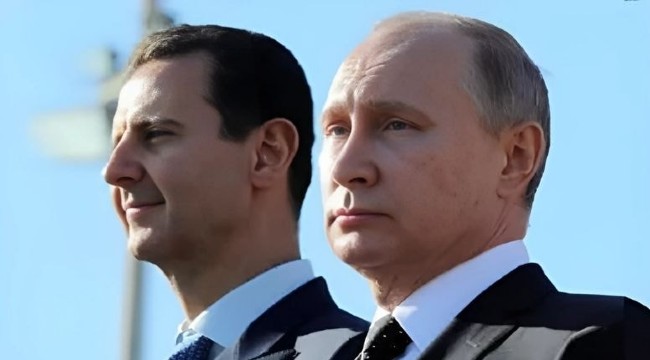
Bashar al-Assad’s departure from Syria and his flight to Moscow has significant implications for both Syria and Russia’s role in the Middle East. After years of devastating civil war in Syria, Assad resigned and sought asylum in Russia, leaving behind a country in turmoil.
Russia’s Ministry of Foreign Affairs clarified that it played no direct role in Assad’s decision, though it was in contact with all factions involved in the Syrian conflict. Notably, Russia’s characterization of the groups now controlling Damascus as “opposition” marks a shift in its position, as previously these groups were referred to by Moscow as “terrorists.”

RUSSIA’ MILITARY PRESENCE IN SYRIA
Since Russia’s intervention in 2015, it has been a vital ally of the Assad regime, providing military support and diplomatic cover at the United Nations. This support helped stabilize Assad’s rule and allowed Russia to expand its military presence in Syria, notably through its naval base at Tartous and airbase at Hmeimim. These bases, located on Syria’s Mediterranean coast, have been crucial to Russia’s broader geopolitical ambitions, particularly in projecting power in the Mediterranean and Africa. According to analysts, these bases are central to Russia’s ability to conduct operations in regions like Libya, Sudan, and Central Africa, and their continued security is a priority for Moscow.
Despite the ongoing conflict in Ukraine, Russia has been able to maintain its presence in Syria, and the Kremlin has assured the security of its bases. However, some military analysts have cautioned that the situation around the bases remains tense, with concerns about how long this security will last.
Assad’s decision to flee Moscow follows a historical pattern of Russian asylum for various controversial figures, including the late Yugoslav leader Slobodan Milošević, various Georgian officials, and U.S. whistleblower Edward Snowden. For Russia, Assad’s loyalty over the years, including his support for Russia’s invasion of Ukraine, is symbolic. It signals to other countries in the region, particularly those in the Gulf and broader Middle East, that Russia will protect its allies as long as they remain loyal. This message reinforces Russia’s image as a protector of its friends in the international arena, contrasting with the U.S. approach, which has sometimes involved abandoning allies.
A MOVE TO AVOID A BLOODY END TO THE REGIME AND ASSAD
The fall of Assad, while less violent than past events in Syria, marks the end of a key chapter in the Syrian conflict. Some analysts believe Russia’s involvement in facilitating Assad’s departure, through talks with Iran and Turkey, was aimed at avoiding a bloody end to his regime and preserving regional stability. This could also open new opportunities for dialogue with other factions, including the opposition group Hayat Tahrir al-Sham (HTS), which has been designated as a terrorist organization by multiple international bodies.
Critics of Putin and Assad, including Russian opposition figures, quickly seized on the event, viewing it as a sign that Russia’s ambitions in the Middle East might be waning. They argued that Putin had sacrificed Assad to secure resources for his war in Ukraine, and questioned the strength of Russia’s position. Ukrainian Foreign Minister Dmytro Kuleba even suggested that Putin’s resources were stretched thin, weakening his overall position.
However, many experts argue that Russia’s broader Middle Eastern strategy will remain largely unaffected by Assad’s fall. While losing Assad may be a blow to Putin’s prestige, it does not fundamentally change Russia’s regional influence. Paul Salem from the Middle East Institute noted that Russia’s key regional relationships—such as energy trade with Gulf states, the sale of civilian nuclear technology, and its alliance with Iran—are unlikely to be disrupted. Additionally, Russia’s 2015 intervention in Syria was primarily motivated by countering U.S. influence in the region, rather than any long-term regional ambition.
In conclusion, while the loss of Assad represents a symbolic setback for Putin, it is not expected to significantly alter Russia’s policies or objectives in the Middle East. The continued strategic importance of Russia’s military bases in Syria and its enduring relationships in the region suggest that Moscow’s Middle Eastern ambitions are likely to persist despite the political upheaval in Syria.
Source: SUMMARIZED FROM ARTICLE ON Al Jazeera