
The Dollar Loses Its Balance as Gold Surges to Record Highs
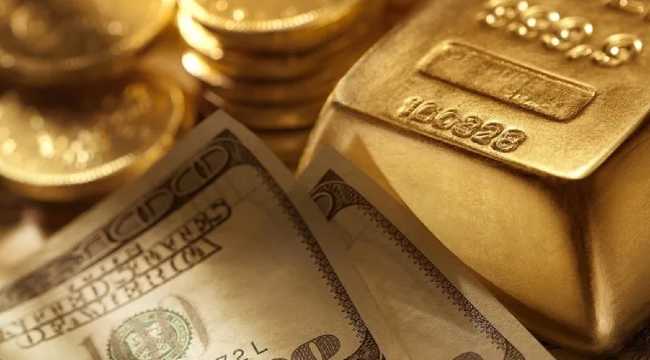
The global markets have witnessed another historic moment as gold prices soared to new all-time highs. Following the weakening of the US dollar, growing uncertainty in Washington, and increasing expectations of interest rate cuts, gold climbed to 3,950 dollars per ounce — just a step away from the symbolic 4,000-dollar mark. Analysts now call this level “the gateway to a new era for gold.”
Global Uncertainty Boosts Safe-Haven Demand
The US federal government’s partial shutdown and the delay in key economic data have driven investors toward safe-haven assets. Combined with mixed signals on the Federal Reserve’s interest rate outlook, these uncertainties weakened the dollar further. Markets now price in a near-certain quarter-point rate cut this month, with additional cuts expected in November and December. According to CME FedWatch data, investors see a 95% chance of an October cut and an 83% chance for December. The continuation of the “cheap money era” has helped eliminate gold’s non-yield disadvantage, fueling the rally even more.

A Shift in Global Monetary Power
Experts argue that the rise in gold cannot be explained by Fed policy alone. Around the world, the dominance of the US dollar is increasingly questioned. Central banks are diversifying their reserves at record speed, especially after Washington froze Russia’s reserves. China, through its Hong Kong channels, is leading efforts to build a new Asia-centered reserve framework — effectively placing gold at the core of a parallel financial system. As KCM Trade analyst Tim Waterer put it, “The Fed’s loose policy has disrupted the dollar’s chemistry,” adding that the yen’s weakness and America’s fiscal uncertainty continue to push gold higher.
ETF Inflows Hit Two-Year Highs
Data shows that gold-backed exchange-traded funds (ETFs) have recorded inflows for seven consecutive weeks, reaching their highest levels since September 2022. Last week alone, there was a net inflow of 655,000 ounces. This growing institutional demand underlines that investors still see gold as a primary shield against global instability.
Silver Outperforms with Industrial Strength
Silver, often called gold’s twin in the commodity world, is following a similar upward path. Spot prices hit 48.6 dollars per ounce — their highest since April 2011. While benefiting from the same macroeconomic factors as gold, silver also gains extra momentum from rising industrial demand. Since the beginning of the year, silver has surged by 68.3%, with an 18% monthly gain that even outpaces gold. Total ETF holdings rose by 10 million ounces last week, reaching 828 million ounces, still below the 2021 peak, suggesting room for further growth.
$4,000 Seen as a Waiting Room, Not a Ceiling
Analysts now believe that 4,000 dollars per ounce is no longer a ceiling but a “waiting room” for gold’s next move. HSBC forecasts that if the Fed cuts rates by another 50 basis points by year-end, gold could test 4,200 dollars. Citi suggests that even a 1% shift of bond yields toward gold could push prices to the 5,000-dollar level, while ANZ Bank sees 4,300 dollars as a realistic 2025 target if central bank buying continues at its current pace.
Gold Returns to the Center of the Investment Universe
Persistent inflation, geopolitical risks, and the erosion of confidence in the dollar are all reshaping gold’s role in global markets. With falling interest rates and weakening monetary discipline, gold is no longer just a hedge — it is evolving into a strategic financial asset that defines the tone of a new economic cycle.
Keywords:
#gold , #dollar , #silver , #market , #finance , #investment , #inflation , #economy , #Fed , #rate , #cut , #ETF , #China , #bank , #reserve , #geopolitics , #trade , #currency , #wealth , #metal