Top 10 Most Important Archaeological Discoveries of 2024, in Turkey
The archaeological organization Arkeofili, established to explain and popularize archaeology to the public and raise awareness about cultural heritage and archaeology in Turkey, has announced its “Top 10 Archaeological Discoveries of 2024”. It was noted that archaeologists had worked intensively both in the field, laboratories, and at desks, continuing to uncover significant information about the past.
It was emphasized that excavations and surveys conducted in every corner of Anatolia led to exciting discoveries that take us back thousands of years. These discoveries not only help understand the past but also serve as a reminder of the responsibility to protect cultural heritage.

The most prominent archaeological discoveries of 2024 in Turkey, as reported by Arkeofili, include:
- 12,000-Year-Old Shaman and 3,600-Year-Old Dagger
- In Çemka Höyük, Mardin, under the leadership of Assoc. Prof. Dr. Ergül Kodaş, a 12,000-year-old shaman burial was found. The remains of a woman, aged between 25-30, who had died of natural causes, were discovered under the floor of a mudbrick building, alongside the skull of a wild ox, a partridge wing, a marten leg, and remains of a sheep or goat. Other burials were also found beneath nearby structures. The woman’s extraordinary burial method suggests she might have been a shaman with access to animal spirits, a significant spiritual figure in her community.
- In Çemka Höyük, Mardin, under the leadership of Assoc. Prof. Dr. Ergül Kodaş, a 12,000-year-old shaman burial was found. The remains of a woman, aged between 25-30, who had died of natural causes, were discovered under the floor of a mudbrick building, alongside the skull of a wild ox, a partridge wing, a marten leg, and remains of a sheep or goat. Other burials were also found beneath nearby structures. The woman’s extraordinary burial method suggests she might have been a shaman with access to animal spirits, a significant spiritual figure in her community.
- Skull Room in Sefertepe
- In Sefertepe, Şanlıurfa, led by Assoc. Prof. Dr. Emre Güldoğan, an unusual room filled with skulls was discovered at a Neolithic settlement. The “Skull Room” contains 22 skulls carefully arranged in a special structure, demonstrating a unique funerary custom where skulls were displayed in special buildings for a period of time.
- In Sefertepe, Şanlıurfa, led by Assoc. Prof. Dr. Emre Güldoğan, an unusual room filled with skulls was discovered at a Neolithic settlement. The “Skull Room” contains 22 skulls carefully arranged in a special structure, demonstrating a unique funerary custom where skulls were displayed in special buildings for a period of time.
- 3,600-Year-Old Bronze Dagger
- In Kumluca, Antalya, under the leadership of Assoc. Prof. Dr. Hakan Öniz, a silver-riveted bronze dagger from the Minoan civilization was discovered 50 meters underwater. The dagger, dating back about 3,600 years, was found in a shipwreck, believed to have been en route to Crete when it sank. This discovery sheds light on the historical trade routes and cultural interactions in the Mediterranean.
- In Kumluca, Antalya, under the leadership of Assoc. Prof. Dr. Hakan Öniz, a silver-riveted bronze dagger from the Minoan civilization was discovered 50 meters underwater. The dagger, dating back about 3,600 years, was found in a shipwreck, believed to have been en route to Crete when it sank. This discovery sheds light on the historical trade routes and cultural interactions in the Mediterranean.
- Urartian Statue
- A massive basalt statue from the Urartian period, weighing about 1 ton, was found in Garibin Tepe, Van, under the leadership of Prof. Dr. Mehmet Işıklı. The statue, about 2 meters tall, represents an important example of Urartian art. It is believed to depict a divine or royal figure, and it is being restored at the Van Museum.
- Pot of Gold Coins
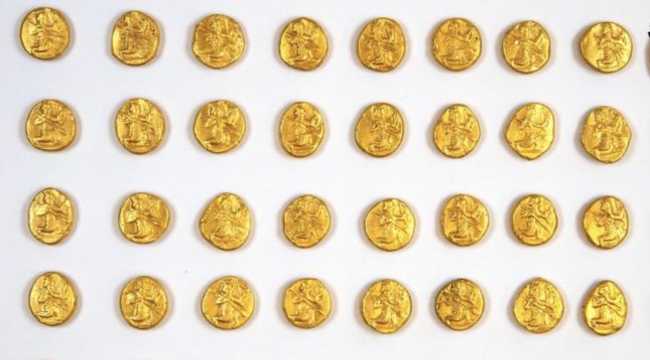
- In Notion Ancient City, Izmir, Prof. Dr. Christopher John Ratteve and his team discovered a 2,500-year-old pot filled with gold coins buried beneath a house. The coins, minted during the Persian Empire, were likely hidden by Persian supporters and mercenaries during the occupation of Notion around 430-427 BC.
- In Notion Ancient City, Izmir, Prof. Dr. Christopher John Ratteve and his team discovered a 2,500-year-old pot filled with gold coins buried beneath a house. The coins, minted during the Persian Empire, were likely hidden by Persian supporters and mercenaries during the occupation of Notion around 430-427 BC.
- 1800-Year-Old Zeus Head
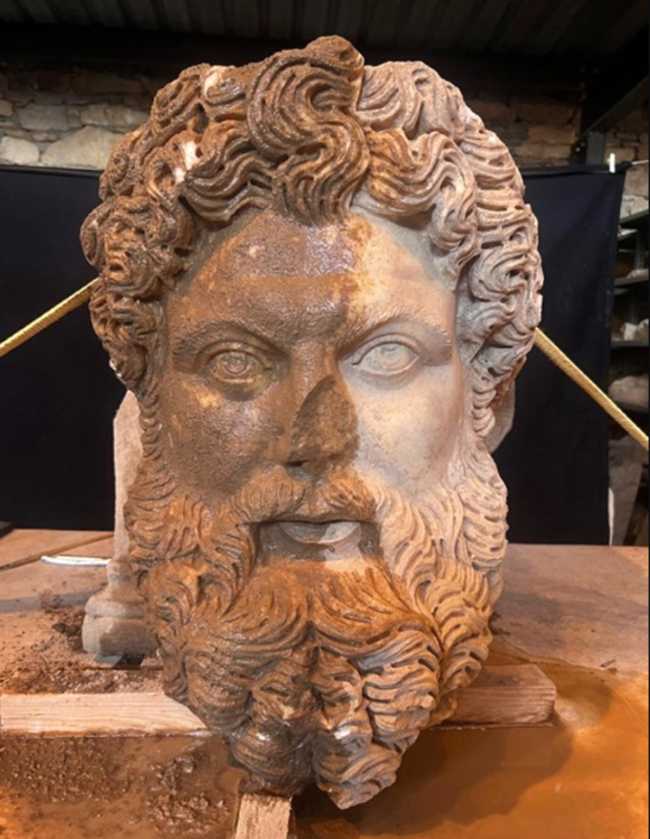
- In Aphrodisias, Aydın, a marble head of Zeus, the king of the gods in Greek mythology, was discovered near the Temple of Aphrodite. The 66 cm tall marble head dates back to the 2nd or 3rd century AD, providing significant insight into the art and architecture of the period.
- In Aphrodisias, Aydın, a marble head of Zeus, the king of the gods in Greek mythology, was discovered near the Temple of Aphrodite. The 66 cm tall marble head dates back to the 2nd or 3rd century AD, providing significant insight into the art and architecture of the period.
- 3,300-Year-Old Hittite Tablet
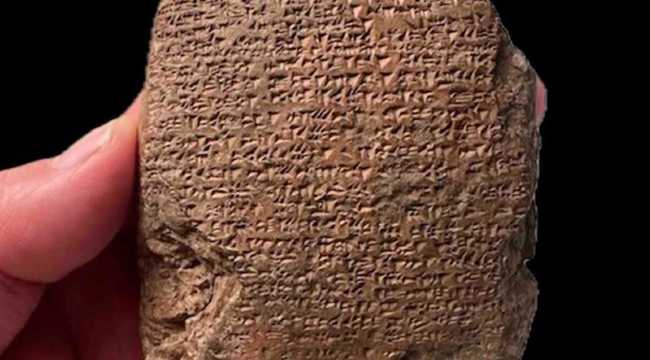
- In Büklükale, Kırıkkale, a 3,300-year-old clay tablet written in cuneiform was uncovered. The tablet, dating to the reign of Hittite King 2nd Tuthaliya, tells of a foreign invasion that resulted in the destruction of several Hittite cities, providing rare insight into Hittite history and their religious practices.
- In Büklükale, Kırıkkale, a 3,300-year-old clay tablet written in cuneiform was uncovered. The tablet, dating to the reign of Hittite King 2nd Tuthaliya, tells of a foreign invasion that resulted in the destruction of several Hittite cities, providing rare insight into Hittite history and their religious practices.
- Piercings in Early Neolithic Graves
- At the Boncuklu Tarla early Neolithic site in Mardin, more than 100 pieces of jewelry used as piercings were found in graves dating back 11,000 years. This discovery provides the earliest solid evidence of body piercing, possibly linked to adolescent rituals.
- At the Boncuklu Tarla early Neolithic site in Mardin, more than 100 pieces of jewelry used as piercings were found in graves dating back 11,000 years. This discovery provides the earliest solid evidence of body piercing, possibly linked to adolescent rituals.
- 8,600-Year-Old Bread at Çatalhöyük
- In Çatalhöyük, Konya, Prof. Dr. Ali Umut Türkcan’s team found remains of bread in an ancient oven, dating back 8,600 years. The bread, made from barley, wheat, and pea seeds, was analyzed and found to have been fermented, offering insights into early food preparation techniques.
- Skulls with Painted Teeth at Tepecik-Çiftlik
- In Tepecik-Çiftlik Höyük, Niğde, Assoc. Prof. Dr. Erhan Bıçakçı’s team found skulls with painted teeth, dating back 9,000 years. These skulls were decorated with pigment and lime, and one skull contained 11 single-rooted teeth, highlighting early burial and ritual practices.
These discoveries continue to shed light on ancient cultures and help protect Turkey’s rich archaeological and cultural heritage.