Why Is Turbulence Getting More Frequent and Intense on Flights?
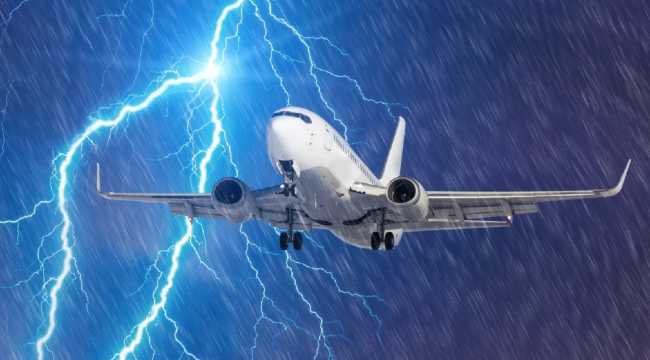
If you’ve felt like airplane turbulence has been worse lately, you’re not imagining it. Not only is turbulence becoming more frequent—it’s also getting stronger. And while it might make even the calmest flyer grip the armrest, is it something we should be worried about?
A Noticeable Rise in Turbulence
Turbulence has always been a part of flying, but in recent years, it’s become more of a concern. According to the U.S. National Transportation Safety Board, over 200 serious injuries have occurred due to turbulence in the U.S. alone since 2009.

Experts say climate change is a major reason. Atmospheric scientist Professor Paul Williams explains that temperature shifts in the jet streams are becoming more pronounced. Jet streams—those high-altitude air currents pilots love to ride—can reach speeds of up to 400 km/h. As the atmosphere warms, these streams become more unstable and powerful, which leads to bumpier skies.
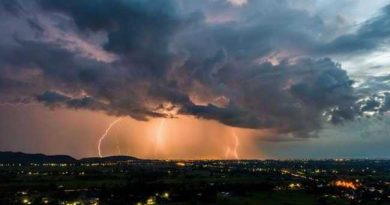
The increase in lightning and tropical storms doesn’t help either. Research from 2014 showed that for every 1°C rise in global temperature, lightning activity increases by about 12%.
Where Is It Worst?
If you’re flying over the North Atlantic, buckle up. Satellite data shows that severe turbulence in this region has gone up by 55% in the last 40 years. Other hotspots include East Asia, the Middle East, North Africa, and North America.
It’s not just passengers feeling the impact—airlines are paying the price too. Turbulence leads to more aircraft maintenance, costly route changes, increased fuel burn, and higher carbon emissions. All of this adds up fast.
How Airlines Are Responding
Airlines aren’t just sitting back and hoping for smoother skies. Some are changing procedures to reduce injuries. For example, Southwest Airlines is ending in-flight service earlier on some routes to cut down on mid-air accidents caused by turbulence.
Technology is also being put to the test. An Austrian startup, Turbulence Solutions, is developing a wing system for small planes that could reduce turbulence effects by up to 80%. But experts warn that integrating such tech into large commercial aircraft could still take decades.
Should You Be Worried?
Here’s the good news: while turbulence can be uncomfortable—and sometimes scary—it’s rarely dangerous. Aircraft wings are built to withstand extreme conditions. Former pilot Chris Keane says a Boeing 747’s wings can flex up to 25 degrees without breaking. That’s a lot of wiggle room.
Still, for passengers with a fear of flying, the increase in turbulence can be a serious psychological challenge. Even if the plane is technically safe, those sudden jolts and shakes can be unnerving.
So, is turbulence getting worse? Yes. Should you panic? Absolutely not. Planes are built to handle it, and pilots are trained to manage it. But don’t be surprised if the skies get a little rougher in the years ahead—especially as our climate continues to change.