Turkey Strikes Big with $4 Billion Oil Discovery
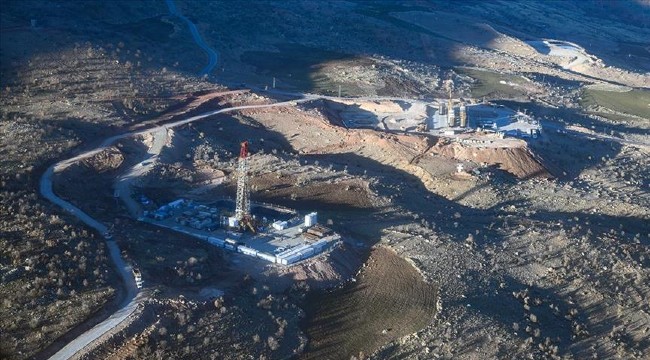
In a major development on the energy front, Energy and Natural Resources Minister Alparslan Bayraktar announced the discovery of 57 million barrels of oil across various regions in Turkey. Valued at approximately $4 billion, this discovery marks a strong step toward strengthening the country’s energy independence.
Speaking about Turkey’s broader energy strategy, Bayraktar emphasized that no corner of the country—on land or sea—will go unexplored. He underlined that drilling activities will continue both onshore and offshore, and these recent results are proof that the strategy is already paying off.

A Closer Look at Diyarbakır’s Untapped Potential
While Gabar remains a headline-grabbing site, Bayraktar highlighted new potential in the Diyarbakır region, where estimates suggest there may be 4 to 6 million barrels worth of shale oil and gas. The ministry is collaborating with U.S. energy companies to leverage their advanced technology in extracting these unconventional resources.
In a 600-square-kilometer zone north of Bismil, 24 vertical and horizontal wells are set to be drilled. The goal? Unlock natural gas and oil trapped inside rock formations. This isn’t just about short-term output—Bayraktar views it as a key move toward long-term energy security.
All Eyes on Gabar: Big Yields, Bigger Goals
Gabar is already proving to be a valuable asset. Bayraktar compared the potential of Diyarbakır’s newly explored sites to Gabar, hinting that some of the four new fields could be just as rich—with up to 350 million barrels in possible reserves. He confirmed that vertical drilling and hydraulic fracturing would begin this year, with the long-term plan being to fully explore the area within the next three years.
Black Sea Gas Output Set to Double by 2025
It’s not just oil making headlines. Bayraktar also shared updates on Turkey’s natural gas operations. Production in the Black Sea has climbed from 6 million to 9.5 million cubic meters per day, and by 2025, that number is expected to hit 20 million cubic meters—enough to power around 8 million homes.
Phase-2 development is already underway at the Sakarya Gas Field. The “Osmangazi” platform, now stationed in Filyos, will process gas from the seabed and integrate it into the national grid. By the end of next year, the ramped-up production should be fully online. And the roadmap doesn’t stop there—Phase-3 is slated for completion by 2028, and a second floating production platform is scheduled to leave Southeast Asia for Turkey in December 2027.
Two New Drilling Ships Join the Fleet
In another major move, Turkey’s offshore energy exploration fleet just got bigger. Two new drilling vessels officially joined the lineup on July 1, adding to the roster that already includes Fatih, Yavuz, Kanuni, and Abdülhamid Han.
One of the new vessels will head straight to the Black Sea to help boost gas output, while the other is expected to begin work in the Mediterranean. Bayraktar even mentioned ongoing site assessments off the coast of Libya and seismic research being planned in Somalia.
Energy Exports to Syria Now Underway
In a significant development on the diplomatic and infrastructure fronts, Bayraktar confirmed that Turkey has begun exporting both electricity and natural gas to Syria. Electricity supply—previously limited to just 3 to 4 hours a day—is being ramped up, with a target of 280 megawatts through existing lines.
As for natural gas, the pipeline between Kilis and Aleppo has been completed and is now operational. Starting August 2, gas from Azerbaijan entering Turkey will be re-exported to Syria via this route. It’s the first time Turkey will be supplying both electricity and gas to its southern neighbor.
Akkuyu Nuclear Plant Nearing Completion
Finally, Bayraktar gave an update on the Akkuyu Nuclear Power Plant. Construction of the first reactor is now 95% complete, with operations expected to begin in 2026. Once fully operational, the plant is set to play a major role in Turkey’s energy supply and diversification strategy.