
Can prices and rents decrease when housing supply increases in Turkey?
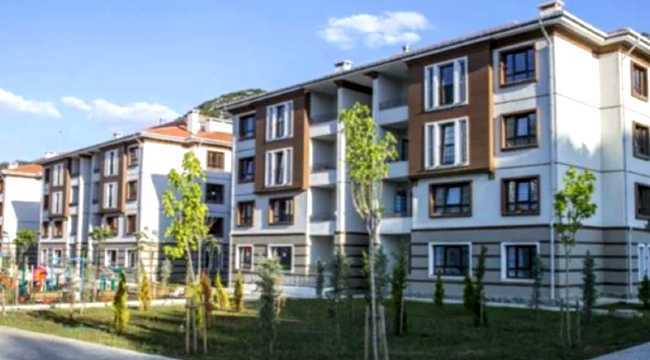
Recently, the economic management made following announcement: “We will increase the housing supply and reduce prices and rents”. Unfortunately, this proposition has no equivalent in practical life. The studies conducted on this issue say otherwise.
The assertion that increasing housing supply will lead to lower prices and rents does not hold true in practice. Studies and real-world examples suggest otherwise. For instance:

– Germany: Instead of increasing housing supply to curb rising rents, Germany focused on building targeted housing for those in need and implementing rental regulations. This has stabilized rents despite nominal economic growth.
– United Kingdom: Despite being an attractive market for real estate investors, the UK has seen only a modest increase in housing stock value, with rental increases remaining below 1%.
– United States: The housing market has grown rapidly, but lessons learned have led to efforts to keep nominal growth below 20%. Despite this, rents continue to rise significantly.
– Russia: The housing sector’s nominal growth is around 50%, yet rents have skyrocketed by 70% annually, with major cities like Moscow experiencing the highest increases.
In contrast, countries like Serbia, Croatia, Montenegro, and former Eastern Bloc nations have kept housing sector growth modest (generally below 20%), resulting in more stable rental increases (around 3-3.5%).
The key issues in countries like Turkey and Russia are not merely about housing supply but involve broader economic factors such as high living costs, market instability, lack of structural reforms, and excessive market intervention. Rapid construction sector growth often leads to delayed inflationary effects, contributing to higher overall living costs without resolving underlying issues.
In summary, increasing housing supply alone does not effectively control prices and rents. Instead, addressing economic stability, market confidence, and targeted housing policies are crucial for achieving more stable and affordable housing markets.