Economy in Turkey: Government shares several positive developments in economy, with important policy messages
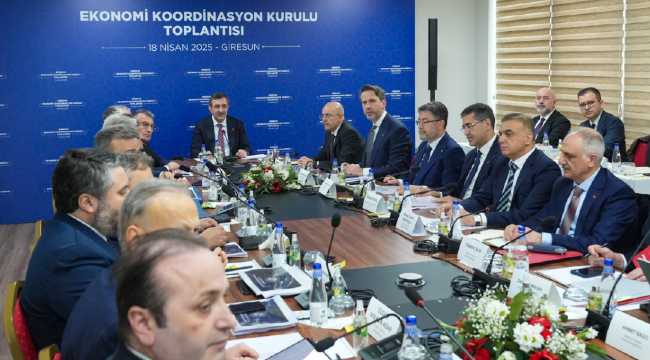
The second Economic Coordination Board (EKK) meeting of 2025 was held in Giresun, chaired by Vice President Cevdet Yılmaz. The meeting brought together key ministers responsible for economic affairs, senior bureaucrats, the Governor of the Central Bank of the Republic of Turkey Fatih Karahan, and representatives from various public institutions.
In the written statement released following the meeting, several positive developments in the Turkish economy were highlighted, along with important policy messages.

Economic Rebalancing and Improvement in the Current Account
The statement noted that through comprehensive economic policies, macro-financial stability had strengthened, economic rebalancing had been achieved, and the current account deficit had significantly narrowed. It also emphasized that the disinflation process, essential to achieving price stability, was proceeding successfully, with annual inflation declining for the past ten months.
The economic administration underlined that they were taking all necessary steps in strong coordination to minimize the effects of recent global and domestic market fluctuations. It was stated that the current program had solidified the foundations of the Turkish economy and increased its resilience.
Structural Reforms and Industrial Transformation
Another key topic discussed during the meeting was the implementation of structural reforms aimed at ensuring sustainable, high, and inclusive growth. Policies to boost competitiveness and productivity are being implemented, while efforts toward a green and digital transformation in industry have accelerated. It was noted that strategic and high value-added investments were being supported through active industrial policies, such as the Technology-Oriented Industry Initiative, Investment Commitment-Based Advance Loans (YTAK), and the HIT-30 High Technology Investment Program.
Special emphasis was placed on facilitating access to finance for producers and exporters.
Employment Growth and Labor Market Policies
Despite a moderate economic pace, nearly 1 million new jobs were created in 2024, and the unemployment rate remained in single digits. Active labor market policies continue, focusing on minimizing skills mismatches—particularly for women and youth—to support employment and increase labor productivity.
Additionally, with the launch of the Employment Protection Support Program in 2025, SMEs in the textile, apparel, leather, and furniture manufacturing sectors are receiving monthly support of 2,500 TL per employee.
Food Supply, Pricing, and Agricultural Measures
The statement acknowledged the recent frost events in some regions of Turkey, which affected certain fruit varieties. However, there is no risk to the domestic food supply for strategic crops such as grains, legumes, and oilseeds. Measures are being taken to ensure continuity of production and consumer access to food at reasonable prices.
Trade Policies and Protectionism
The meeting also addressed measures to reduce import dependency in exports, increase high value-added and technology-intensive production, and ensure that Turkey gains a larger share of global trade. Recent trends of increased protectionism in international trade were also assessed, with their potential risks and opportunities for Turkey’s foreign trade discussed.
Regional Development and DOKAP
In line with regional development goals, the Eastern Black Sea Project (DOKAP) Action Plan was publicly introduced. This plan aims to activate regional potential and support local development.
Conclusion
In conclusion, the EKK meeting emphasized the ongoing economic recovery, price stability, improvement in the current account, employment growth, and regional development efforts. The government reiterated its commitment to combating inflation, while continuing to support investment, employment, and exports to further strengthen the economy and ensure a path of stable growth.