
Tensions Rise Between Donald Trump and Elon Musk: From Partnership to Public Feud
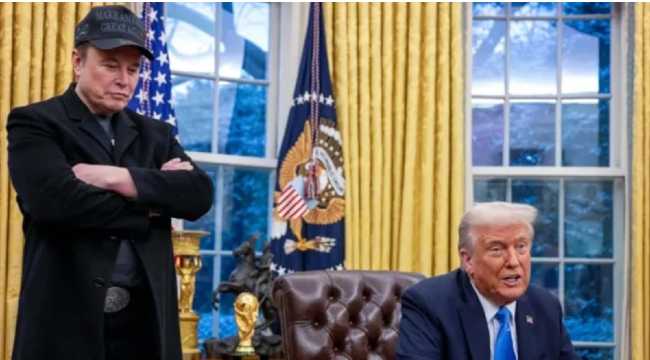
In what began as a seemingly strong political partnership, tensions between former U.S. President Donald Trump and tech billionaire Elon Musk have dramatically escalated. Once allies in a shared mission to reform government spending, the two figures are now trading public accusations and criticisms over policy, power, and political direction.
How It Started: A Political Alliance

Elon Musk, CEO of Tesla and SpaceX, was once a key supporter of Trump, reportedly backing his campaign with $200 million. After Trump’s inauguration, he appointed Musk as the head of the Department of Government Efficiency (DOGE), a newly formed agency aimed at eliminating federal waste. Under Musk’s leadership, DOGE implemented drastic reforms, including mass layoffs and the shutdown of several federal agencies such as USAID.
Initially, their relationship seemed warm. In February, both appeared on Fox News, praising one another. Trump called Musk “a true leader,” while Musk stated, “I love the President, to be honest.”
Legal and Political Backlash
Their collaboration soon met legal challenges. In early February, 14 U.S. states—including California, New York, and Massachusetts—filed a lawsuit claiming Musk’s appointment as DOGE director was unconstitutional, describing his role as one with “unchecked and unlimited power.”
At the end of February, Trump began urging Musk to take a more aggressive approach to government audits. In response, Musk sent out an internal directive to federal employees demanding detailed reports on their weekly activities, threatening that failure to respond would be considered a resignation. The move triggered widespread backlash among federal staff, many of whom shared the email publicly in protest.
Economic Fallout and Public Tensions
While Trump vocally supported Tesla—especially after its stock suffered a 25 percent drop amid global protests against government austerity—Musk’s influence in the administration began to decline by April. Media reports suggested that both men agreed it was time for Musk to return to his private ventures.
This shift didn’t go unnoticed. Musk later clashed with Peter Navarro, one of Trump’s senior advisers, calling him “an idiot” in response to dismissive remarks. The White House brushed it off, calling it “just how men talk.”
By late April, Musk announced he would be reducing his involvement in DOGE, stating he would contribute only one or two days a week unless needed more urgently. A month later, he signaled a significant cutback in political spending, claiming he had already invested too much in politics.
The Breaking Point: “Big Beautiful Bill”
At the heart of the dispute lies a tax and spending reform bill dubbed the “Big Beautiful Bill,” passed by the House and awaiting Senate approval. Initially believed to reflect Trump’s campaign promises, the bill became a focal point for Musk’s frustrations.
Musk resigned from his government role at the end of May. Shortly after, he harshly criticised the bill on X (formerly Twitter), calling it “a disgusting disgrace.” He accused lawmakers of blindly supporting it without even reading it.
Trump responded by posting a screenshot of Musk’s resignation post, suggesting Musk was now attacking a bill he had once supported. During a press conference, Trump remarked that Musk’s tone had changed after leaving the White House, questioning the stability of their relationship.
The War of Words Escalates
Musk fired back, stating the bill had never been shown to him and was rushed through Congress overnight. He claimed that without his support, Trump would have lost the election and Democrats would control the House.
Trump responded by suggesting that one way to cut billions from the federal budget would be to cancel Musk’s government contracts and subsidies—something he criticized President Biden for not doing.
Then came the bombshell: Musk accused Trump of being named in the sealed Jeffrey Epstein files, claiming that was the real reason some documents had not been released to the public.
Final Exchanges and Fallout
Trump, in his final reply on Truth Social, claimed Musk should have voiced his objections months earlier and defended the “Big Beautiful Bill” as the largest tax cut and spending reduction in U.S. history. He warned that without it, the country could face a 68 percent tax hike.
Musk countered by predicting economic decline due to Trump’s trade tariffs and publicly supported a post by user Ian Miles Cheong suggesting Trump should be removed from office and replaced by J.D. Vance. Musk simply replied, “Yes.”
Summary
What began as a cooperative relationship between Trump and Musk has spiraled into a bitter, highly public feud. The disagreement centers on policy direction, personal influence, and the controversial “Big Beautiful Bill.” With both men commanding massive platforms and loyal followings, their conflict could significantly influence American political discourse leading up to the next election cycle.