
Shopping Malls Are Crowded — But What Do Spending Patterns Really Show?
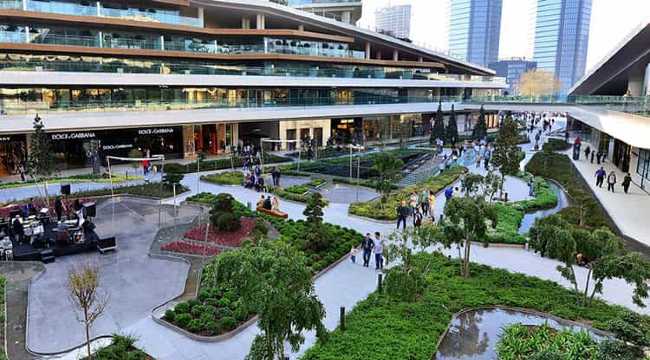
Claims such as “shopping malls are full, so there is no crisis” have become common in public debates. Packed malls, heavy traffic, crowded cafés, and even record-breaking movie attendance are often cited as proof that economic hardship is exaggerated. However, when visitor numbers are examined together with actual spending data, a much more nuanced picture emerges.
Since inflation began accelerating in 2021, purchasing power has steadily weakened. Despite this, shopping malls have remained busy, leading to questions about whether consumer behavior reflects resilience or adaptation rather than prosperity.

Why Are Malls Still Busy?
Turkey currently has 447 shopping malls, 128 of which are located in Istanbul. Given that Istanbul accounts for roughly 20 percent of the country’s population, it serves as a representative sample for national trends. While some malls have lost momentum, major and centrally located ones continue to attract millions of visitors each year.
High-profile malls such as Cevahir, Mall of Istanbul, Torium, ArenaPark, ArmoniPark, and İstinyePark report annual visitor figures ranging from several million to tens of millions. When averaged out, Istanbul’s malls receive an estimated 1.28 billion visits per year. This translates into roughly 82 mall visits per person annually—about one-fifth of the year spent passing through shopping malls.
In today’s urban environment, this frequency is not necessarily excessive. Many basic needs, social activities, entertainment options, and even public services are now concentrated within shopping malls, making them everyday living spaces rather than purely consumption hubs.
The “Doom Spending” Effect
The persistence of crowded malls does not automatically signal strong purchasing power. Economist Mahfi Eğilmez has described this behavior as “doom spending,” a pattern observed in high-inflation environments, particularly in parts of Latin America. When people believe they cannot save, protect their wealth from inflation, or significantly increase their income, they tend to shift toward short-term, small-scale, and non-essential consumption.
In this context, malls become social and psychological escape spaces rather than indicators of financial comfort. People may still go out, browse, and socialize, even as their real purchasing power declines.
Spending Is Rising — But Not as Fast as Incomes
Banking data from the Interbank Card Center (BKM) shows that average spending per transaction at malls and supermarkets has increased significantly in nominal terms. Between 2016 and October 2025, card-based spending per transaction rose sharply for both debit and credit cards. However, when adjusted for wage growth, a different story emerges.
Over the same period, the minimum wage increased by nearly 1,600 percent, while per-transaction spending rose at a much slower pace. This gap indicates that although people continue to spend, their expenditures have not kept up with income growth in real terms. Changes in payment habits and inflation play a role, but the key takeaway is that consumption has not expanded proportionally with wages.
Crowds Do Not Equal Prosperity
The data suggests that shopping malls can be full even when economic pressure persists. High visitor numbers reflect changing lifestyles, limited alternatives for social spaces, and adaptive consumer behavior rather than strong purchasing power. Spending is more cautious, more fragmented, and increasingly focused on basic needs.
In short, crowded malls do not disprove economic strain. Instead, they highlight how consumers adjust to inflation by maintaining visibility in public spaces while tightening their actual spending.
Keywords: #ShoppingMalls #TurkeyEconomy #ConsumerSpending #Inflation #PurchasingPower #DoomSpending #RetailTrends #CostOfLiving #EconomicBehavior