
Trump Secures Major Trade Deal with EU: Energy Wins for the US, Uncertainty for Europe
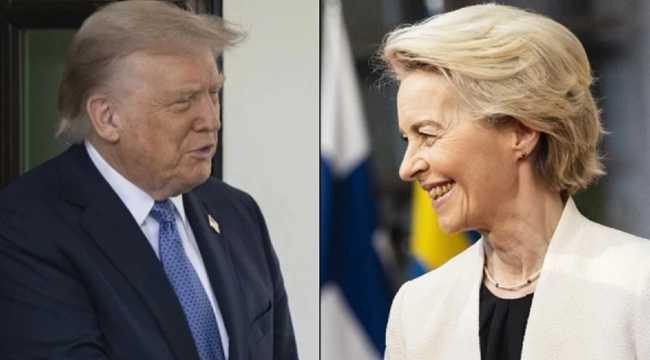
In a surprise announcement, US President Donald Trump revealed a major trade agreement with the European Union, which imposes a 15% tariff on most EU imports and compels the EU to make massive investments in American energy products. The deal, struck during Trump’s trip to Scotland was finalized in a high-stakes meeting with European Commission President Ursula von der Leyen.
The Heart of the Deal: US Energy Dominance

Trump proudly stated that the EU had agreed to purchase $750 billion worth of American energy products, including oil, natural gas, LNG, and nuclear fuel. Additionally, EU nations are committing over $600 billion in new investments in the US economy.
Despite the agreement, the US will still impose a 15% tariff on imported European goods. Trump had earlier threatened to raise tariffs on EU products to 30% starting August 1 if a deal wasn’t reached. Currently, European cars are taxed at 25%, steel and aluminum at 50%, and various other goods at 10%.
“The Greatest Trade Deal Ever” – Trump’s Bold Claim
Calling it “the greatest trade deal ever,” Trump expressed deep satisfaction with the outcome. Von der Leyen, on the other hand, emphasized the importance of stability and predictability, suggesting that the agreement provided a much-needed framework for ongoing cooperation. However, many analysts point out that the 15% tariff level is significantly above historical norms.
Speaking to The Guardian, one analyst summed up the imbalance clearly: “Europe gets 15% tariffs on its exports, forced investments in US energy and military sectors, and no retaliation. That’s not a negotiation—that’s what you’d call the art of the deal.”
Is the Deal Set in Stone? Experts Say Not Quite
Carsten Nickel, deputy director of research at the consultancy firm Teneo, warned that this is a political-level agreement, not a deeply negotiated trade deal. He likened it to the previous US-Japan deal, where terms remained open to interpretation and revision.
Indeed, a senior US official confirmed that if the EU doesn’t follow through on its investment promises, Trump may raise tariffs even further. This leaves the door wide open for potential shifts in the deal’s structure and implementation.
German Industry Pushes Back Amid Growing Concerns
German Chancellor Friedrich Merz cautiously welcomed the agreement, noting that it avoided a full-blown trade war that could have severely impacted Germany’s export-dependent economy. However, Germany’s powerful auto sector is already feeling the strain.
Automakers like Volkswagen, Mercedes, and BMW are currently grappling with a 27.5% tariff on vehicles and spare parts. Volkswagen alone reported a €1.3 billion drop in profits during the first half of the year, blaming US tariffs.
The influential Federation of German Industries (BDI) issued a sharp critique, warning that the new 15% tariffs will have a “deeply negative impact on export-driven German industry.”
A Win for Trump, but What About Europe?
While the US celebrates what Trump calls the biggest trade deal ever, many in Europe are questioning what, if anything, the EU gained in return. The deal cements America’s role as an energy powerhouse and underscores Trump’s transactional approach to diplomacy—but at a cost that some argue Europe may be paying alone.